
Introduction
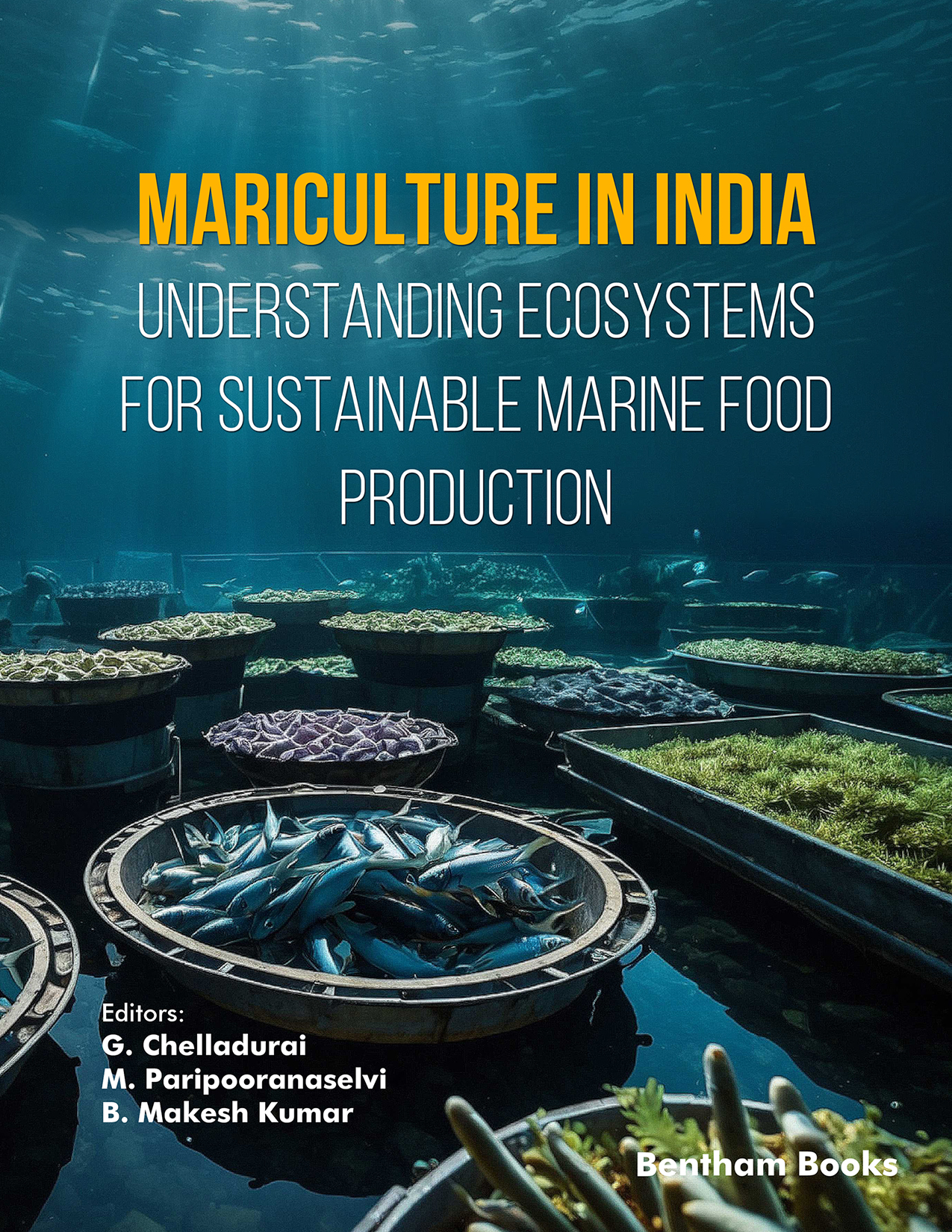
Mariculture in India: Understanding Ecosystems for Sustainable Marine Production explores the growing importance of sustainable marine aquaculture in supporting global food security, livelihoods, and coastal economies. The book highlights modern mariculture practices, technological advancements, environmental challenges, and management strategies for sustainable aquatic production systems.
The book begins with global mariculture production trends, fisheries development, and India's contribution to the sector. It discusses major farming systems, including shrimp, seaweed, lobster, crab, oyster, and ornamental fish culture, along with cage farming and integrated multi-trophic aquaculture (IMTA). Dedicated chapters examine mariculture pollution, biodiversity impacts, disease management, aquafeed development, and the role of biotechnology in improving productivity and sustainability. The book also addresses environmental monitoring, biosecurity, precision fish farming, sustainable feed management, and regulatory frameworks for responsible mariculture practices.
Key Features
- - Comprehensive overview of global and sustainable mariculture practices.
- - Covers IMTA, cage culture, aquafeed, and biotechnology applications.
- - Provides insights into disease management, pollution control, and biodiversity conservation.
- - Discussions on sustainable policies, precision fish farming, and environmental monitoring.
- - Real-world strategies for improving productivity and coastal resource management.
Target Readership :
Researchers, academics, postgraduate students, and professionals in fisheries science, aquaculture and marine biology.