
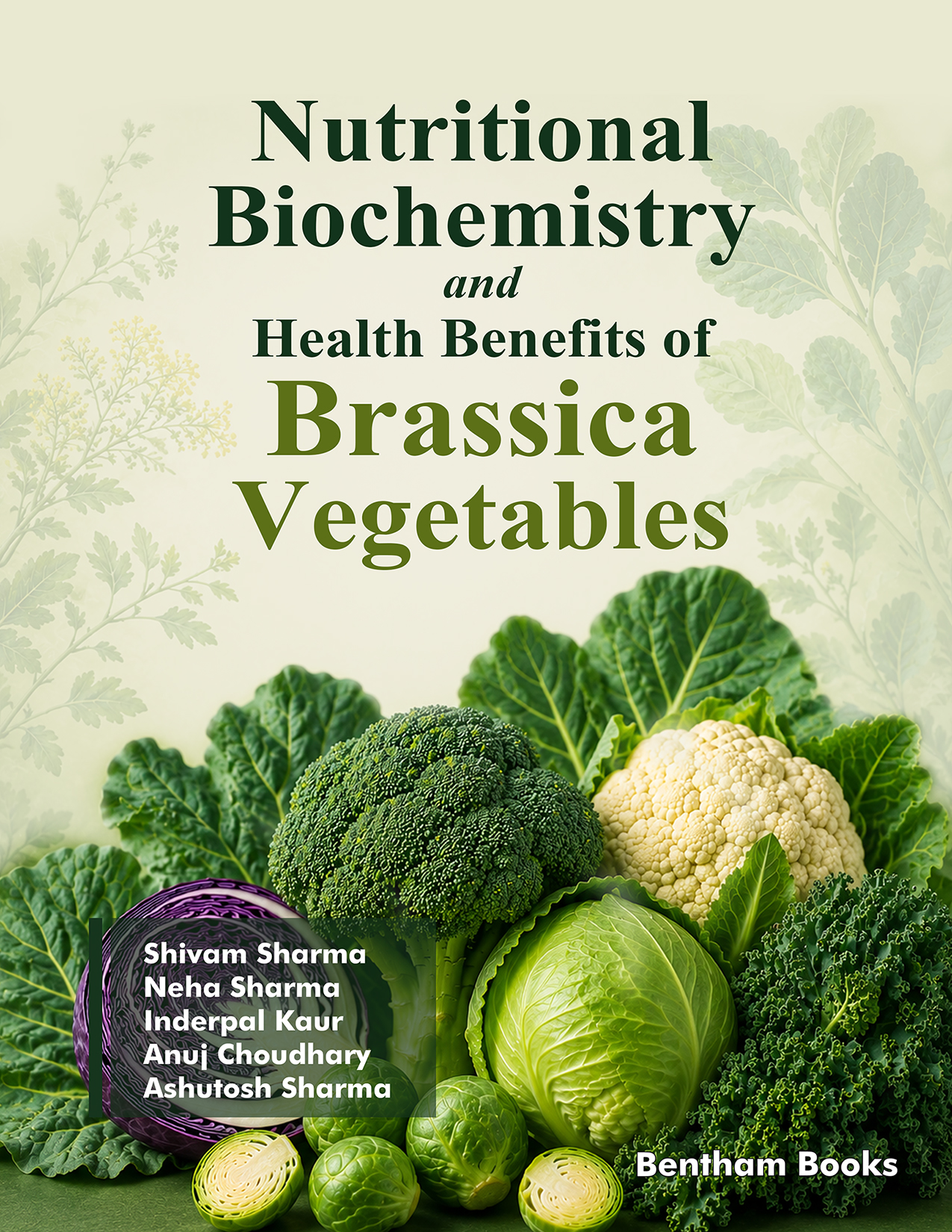
Nutritional Biochemistry and Health Benefits of Brassica Vegetable

Authors: Shivam Sharma, Neha Sharma, Inderpal Kaur, Anuj Choudhary, Ashutosh Sharma

Nutritional Biochemistry and Health Benefits of Brassica Vegetable

ISBN: 979-8-89881-607-0
eISBN: 979-8-89881-606-3 (Online)

Introduction

This handbook provides a comprehensive overview of the nutritional composition, bioactive compounds and health-promoting properties of Brassica vegetables. It explains the scientific basis of their nutritional value and examines how compounds such as glucosinolates, phenolics and carotenoids contribute to disease prevention and overall health.

The book covers Brassica vegetables, microgreens, sprouts and by-products, highlighting their potential as functional foods. It also discusses the role of Brassica consumption in supporting metabolic health, healthy aging, thyroid function and tuberculosis management, along with the effects of cooking methods, bioavailability and metabolism on nutritional benefits. Additional chapters examine biotechnological approaches for improving phytochemical content and the influence of abiotic stress on Brassica crops.

This handbook serves as a useful reference for students, researchers, nutritionists, food scientists and healthcare professionals interested in functional foods and plant-based nutrition.


Key Features

  • - Explains the nutritional composition and health benefits of Brassica vegetables.
  • - Covers major bioactive compounds and their biological functions.
  • - Examines the role of Brassica foods in disease prevention and healthy aging.
  • - Discusses cooking methods, bioavailability and metabolism of key nutrients.
  • - Explores biotechnological approaches for enhancing phytochemical content.
  • - Summarizes current research with chapter introductions, conclusions and references.

Target Readership:

Students, researchers and professionals (nutritionists, food scientists and healthcare professionals).

Foreword

It is with great pleasure that I introduce the book 'Nutritional Biochemistry and Health Benefits of Brassica Vegetables' written by Sharma et al., which is a timely and comprehensive resource published by Bentham Science Publishers. I have witnessed the growing global interest in plant-based human nutrition and in the role of Brassica vegetables in nutritional security. Brassica species, including familiar staples like broccoli, cabbage, cauliflower, and kale, have long been recognized for their distinct flavors and culinary versatility. However, their true value extends far beyond the plate. These remarkable plants are powerhouses of essential vitamins, minerals, and, critically, a unique array of bioactive compounds such as glucosinolates, phenolics, and carotenoids. Scientific inquiry has increasingly linked these compounds to a wide spectrum of health benefits, including potent antioxidant, anti-inflammatory, anticancer, and cardioprotective effects, as well as their contribution to supporting the immune system.

This book meticulously unveils the intricate nutritional biochemistry of Brassica vegetables, providing in-depth analyses of their constituent compounds and elucidating the mechanisms through which they confer health advantages. It serves as an invaluable resource, synthesizing cutting-edge research to provide a holistic understanding of how these vegetables support human health.

I congratulate the authors for their valuable efforts in compiling such a comprehensive and insightful work. This book will undoubtedly become an indispensable academic resource for researchers, nutritionists, public health professionals, and indeed, anyone interested in leveraging the health benefits of Brassica vegetables. It represents a significant contribution to the growing knowledge on functional foods and their vital role in preventive healthcare. Once again, I congratulate all the authors for compiling comprehensive information on nearly every aspect of the nutritional biochemistry of Brassica vegetables.

Vinay Bhardwaj
ICAR–National Research Centre on Seed Spices (NRCSS),
Ajmer, Rajasthan, India