
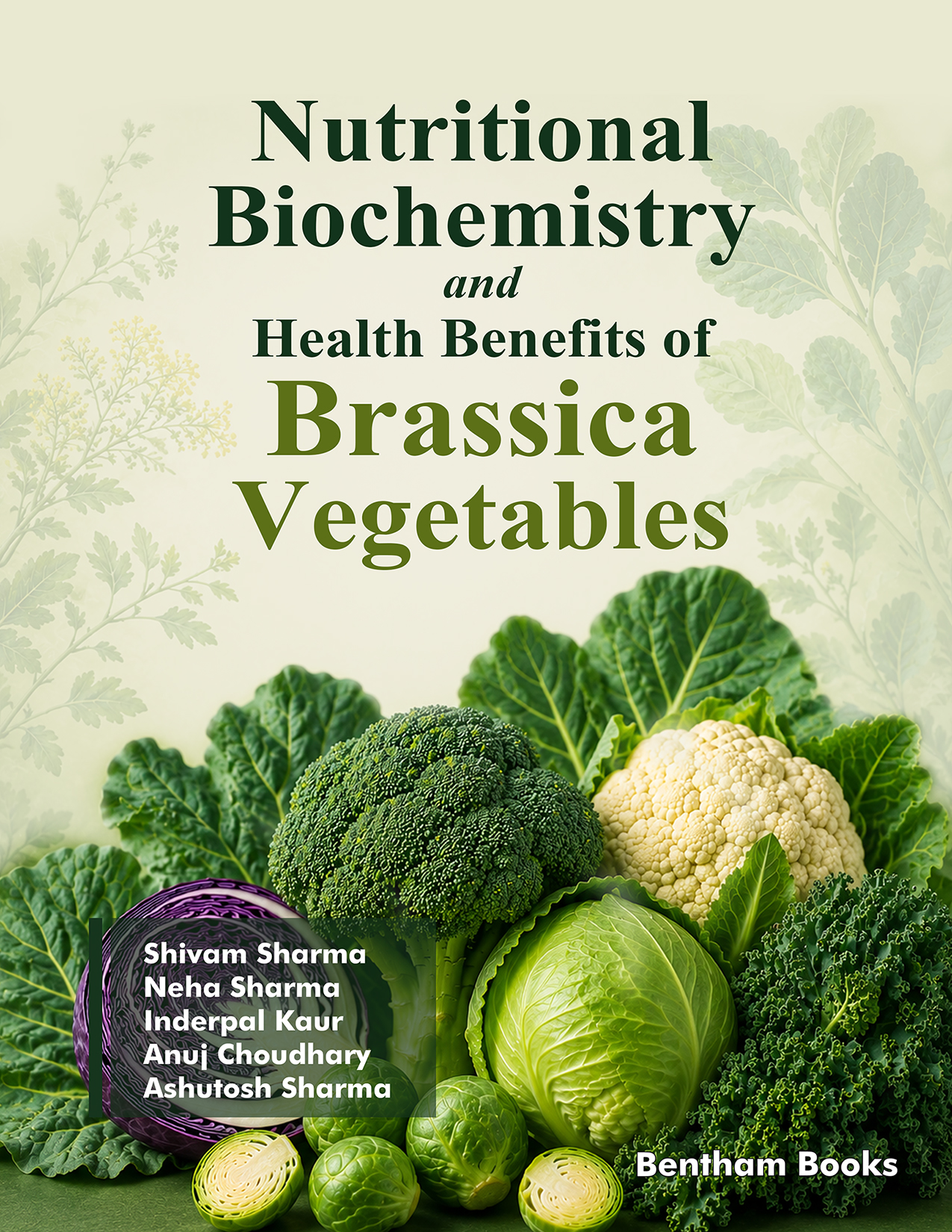
Nutritional Biochemistry and Health Benefits of Brassica Vegetable

Authors: Shivam Sharma, Neha Sharma, Inderpal Kaur, Anuj Choudhary, Ashutosh Sharma

Nutritional Biochemistry and Health Benefits of Brassica Vegetable

ISBN: 979-8-89881-607-0
eISBN: 979-8-89881-606-3 (Online)

Introduction

This handbook provides a comprehensive overview of the nutritional composition, bioactive compounds and health-promoting properties of Brassica vegetables. It explains the scientific basis of their nutritional value and examines how compounds such as glucosinolates, phenolics and carotenoids contribute to disease prevention and overall health.

The book covers Brassica vegetables, microgreens, sprouts and by-products, highlighting their potential as functional foods. It also discusses the role of Brassica consumption in supporting metabolic health, healthy aging, thyroid function and tuberculosis management, along with the effects of cooking methods, bioavailability and metabolism on nutritional benefits. Additional chapters examine biotechnological approaches for improving phytochemical content and the influence of abiotic stress on Brassica crops.

This handbook serves as a useful reference for students, researchers, nutritionists, food scientists and healthcare professionals interested in functional foods and plant-based nutrition.


Key Features

  • - Explains the nutritional composition and health benefits of Brassica vegetables.
  • - Covers major bioactive compounds and their biological functions.
  • - Examines the role of Brassica foods in disease prevention and healthy aging.
  • - Discusses cooking methods, bioavailability and metabolism of key nutrients.
  • - Explores biotechnological approaches for enhancing phytochemical content.
  • - Summarizes current research with chapter introductions, conclusions and references.

Target Readership:

Students, researchers and professionals (nutritionists, food scientists and healthcare professionals).

Preface

Research on nutrition and its effects on human health has evolved considerably in recent decades, with growing emphasis on bioactive compounds. Among the various vegetable families that enhance human health, Brassica vegetables are particularly notable for their distinctive blend of essential nutrients and bioactive phytochemicals with health-promoting properties. This publication, titled ‘Nutritional Biochemistry and Health Benefits of Brassica Vegetables’, seeks to offer an in-depth analysis of these extraordinary vegetables from a biochemical standpoint. It integrates the most recent scientific findings regarding their molecular structure, assesses their contributions to human health, and examines their contributions to human health. Each chapter focuses on the essential nutrients, antioxidants, vitamins, minerals, and bioactive compounds present in Brassica species, including glucosinolates, flavonoids, and carotenoids, and the physiological effects these compounds may have on human health.

The objective of this book is to connect laboratory findings with practical applications. It provides insights into incorporating these vegetables into daily diets to promote well-being. By examining their biochemical characteristics, this work also highlights the health advantages of Brassica vegetables within the framework of contemporary nutritional science. We explore how specific compounds in Brassicas interact with metabolism, immune function, and the gut microbiome. It also explores their potential roles in chronic disease prevention. It is my aspiration that this book will be a valuable reference for students, researchers, healthcare practitioners, and anyone interested in the significant influence of diet on health. As the body of evidence continues to grow, it becomes increasingly evident that Brassica vegetables not only form a crucial part of a nutritious diet but also represent a promising direction for future research aimed at preventing and managing a variety of chronic diseases.

As readers embark on this journey through the fascinating world of Brassica vegetables, I invite you to explore both their science and their practical applications. May this book inspire readers to incorporate more of these nutrient-dense vegetables into their diets and to consider their potential for fostering better health outcomes for all. This preface sets the stage for a deep dive into the biochemical properties of Brassica vegetables and highlights their significance in health and disease prevention. It aims to engage both scientific and general audiences by making the content accessible while grounding it in rigorous research.

Shivam Sharma
Department of Agricultural Sciences,
Faculty of Agricultural Sciences
DAV University, Jalandhar
Punjab, India

Neha Sharma
Department of Vegetable Science and Floriculture
CSK HPKV, Palampur, Himachal Pradesh, India

Inderpal Kaur
Department of Biochemistry, Regional Research Station,
Punjab Agricultural University,
Ludhiana, Punjab, India


Anuj Choudhary
Department of Biology and Environmental Sciences
CSK HPKV, Palampur, Himachal Pradesh, India

&

Ashutosh Sharma
Faculty of Agricultural Sciences
DAV University, Jalandhar, Punjab, India