
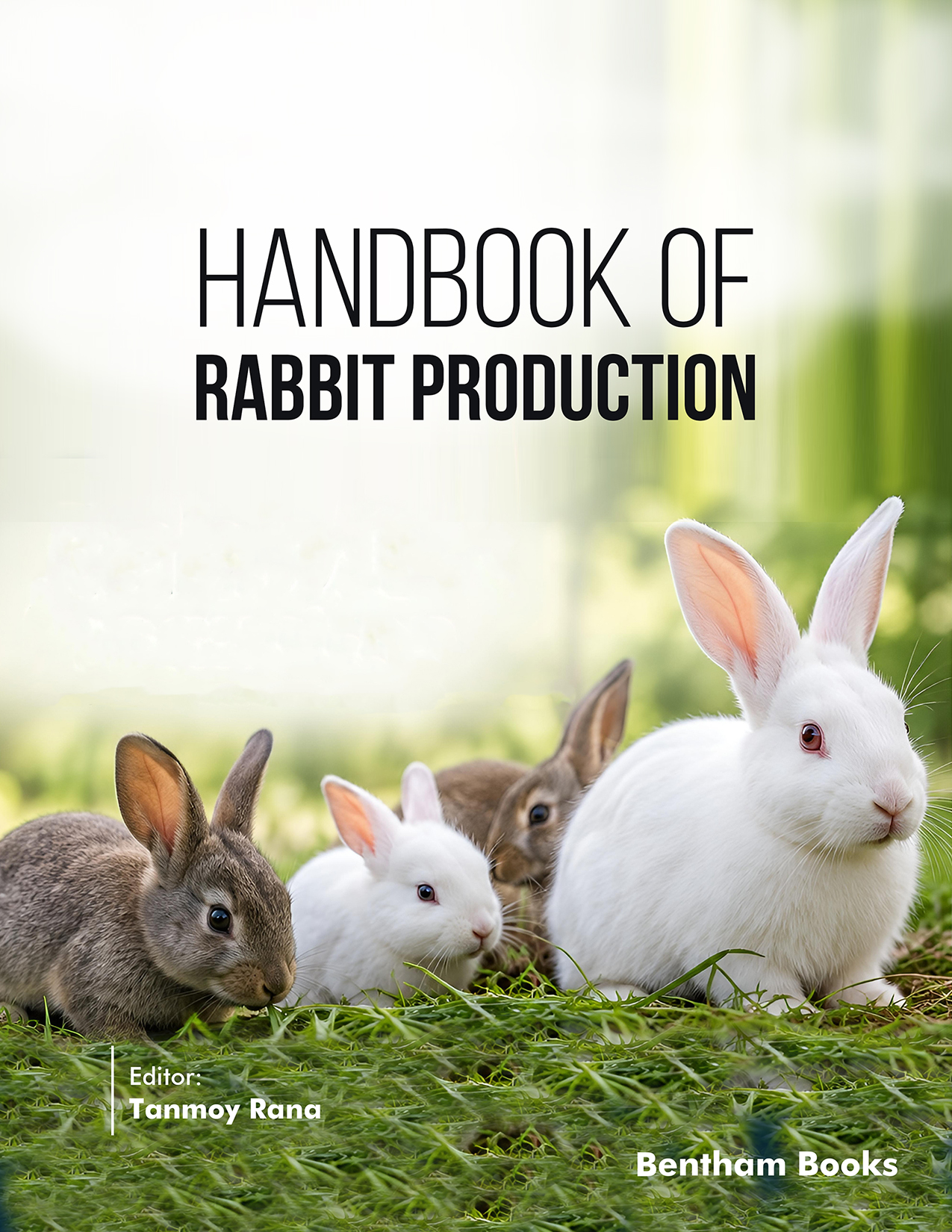
Handbook of Rabbit Production

Editor: Tanmoy Rana

Handbook of Rabbit Production

ISBN: 979-8-89881-874-6
eISBN: 979-8-89881-873-9 (Online)

Introduction

Handbook of Rabbit Production offers a comprehensive, science-based guide to modern rabbit farming, integrating breed selection, reproductive management, nutrition, housing and welfare with practical strategies for disease prevention, biosecurity and farm economics. Combining fundamental biology with applied management, it equips readers to improve productivity, product quality and farm sustainability across meat, fur, and laboratory production systems.


Key Features

  • - Covers the complete rabbit production cycle, from breed selection to farm-level management.
  • - Addresses breeding, kindling, litter care, growth and nutrition.
  • - Discusses housing, environmental management and welfare-focused practices.
  • - Explores disease prevention, biosecurity and veterinary care.
  • - Includes farm economics, record keeping, marketing and value addition.
  • - Emphasizes sustainable and economically viable production practices.

Target Readership :

Students, veterinarians, animal scientists, researchers, farmers, extension workers and entrepreneurs involved in rabbit production and animal husbandry.

Preface

The new book entitled “Handbook of Rabbit Production” is fully structured and updated according to the academic needs of the students. The rabbit is reared not only for meat and fur, but is also used as a pet and laboratory animal. The book covers general aspects of rabbit production, including housing, feeding, rearing, reproduction, genetics, fur, meat production, health, and diseases. Current aspects of slaughter and its marketing, as well as coat colour genetics, are fully described in the book. The comprehensive book serves as a reference book for graduates and postgraduates of Veterinary and Animal Husbandry, teachers, and academics in educational and research institutions. The book is also useful for rabbit farmers, personnel in the meat industry, and veterinarians. Several authors carefully wrote chapters based on their professional experiences. In addition, the e-book is a very reliable resource for field functionaries in rural areas and on livestock farms in both the public and private sectors, engaged in rabbit production. This includes a range of relevant topics and information. This can be utilized as a reference book for institutes and as a guide for rabbit farmers and pet rabbit owners. I also welcome readers to share their valuable opinions, criticisms, suggestions, and queries to help improve the next edition for the betterment of the readership.

Tanmoy Rana
Department of Veterinary Clinical Complex
West Bengal University of Animal & Fishery Sciences
Kolkata, West Bengal, India