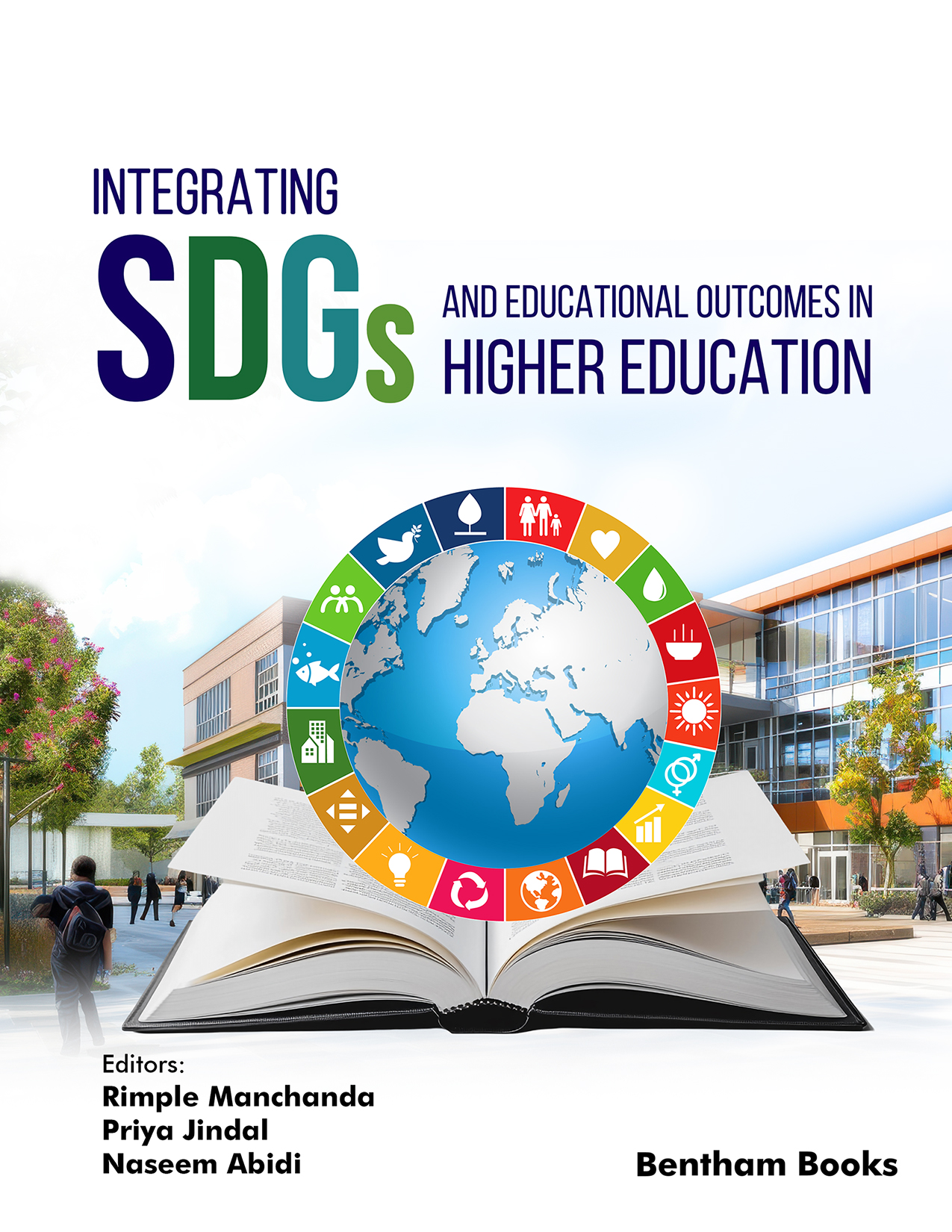
I would like congratulate all three eminent editors Professor Rimple Manchanda, Dr Priya Jindal and Professor Naseem Abidi; for presenting an important and influential publication of time “Integrating SDGs and Educational Outcomes in Higher Education Institutions”, which is indeed a significant contribution to bringing the impactful positive change globally , making life more easy , through the education sector interventions.
The purpose of this book is to explore and demonstrate how integrating the United Nations (UN) Sustainable Development Goals (SDGs) with educational outcomes can enhance the efficiency of Higher Education Institutions (HEIs). This book covers various topics, including best practices in sustainability integration, educational frameworks, and the influence of global initiatives like the Impact Ranking on promoting SDG-aligned transformations within academic institutions.
While several works have been published on integrating SDGs into higher education, this book aims to systematize these contributions and provide a comprehensive guide for HEIs. This book explores the essential role that higher education plays in preparing future generations to effectively navigate and address the complexities of sustainability challenges. By integrating the SDGs into their curricula, research, leadership, operations, administration, and engagement activities, HEIs can contribute significantly to achieving these Global Goals by 2030. Through detailed analyses, case studies, and strategic recommendations, this book aims to serve as a valuable resource for educators, administrators, policymakers, and researchers committed to fostering sustainability through higher education.
This book provides a broad and comprehensive exploration of how HEIs can integrate the UN SDGs into their various functions. This includes strategies for embedding SDGs within the curriculum across diverse disciplines, promoting research that addresses SDG challenges, and encouraging collaborative and cross-disciplinary research initiatives. It also examines the integration of SDGs into institutional policies and strategic plans, enhancement of a campus-wide commitment to sustainability, and implementation of sustainable practices in campus operations such as energy use, waste management, and procurement. Through case studies of green campus initiatives and their impact, the book illustrates successful sustainability practices. Additionally, it looks into the role of HEIs in local and global community development through extension programs and community partnerships. The participation of HEIs in global networks and initiatives, collaborative projects, and partnerships that advance SDG goals is explored. Finally, the book also intends to discuss metrics and indicators for measuring progress towards SDG targets, as well as reporting frameworks for transparency in sustainability efforts.
The SDGs, adopted by the United Nations in 2015 through the Agenda for Sustainable Development, represent a global commitment to address the most challenging issues humanity faces today. The key objective of SDGs consists of 17 interconnected Goals, which include marginalized and vulnerable populations, addressing challenges such as poverty, hunger, health, education, gender equality, clean water, sustainable energy, economic growth, and climate action to safeguard the planet and ensure prosperity and well-being for all by 2030. The focus is on the three key areas: People, Planet, and Profit. By integrating social, economic, and environmental sustainability, the SDGs offer a comprehensive framework for sustainable development that aims to transform our world for the better. Each goal has specific targets and indicators to measure progress and ensure accountability.
Achieving the SDGs requires collaboration and innovation across sectors and societies. The HEIs hold an important position in society, not only as centres of academic excellence and research but also as agents of social change and development. To achieve the vision of the UN SDGs, HEIs must transform into lifelong learning institutions. This transformation involves extending learning opportunities beyond traditional academic boundaries and engaging more deeply with communities through extension programs. Through targeted programs that address community needs, build capacity, and enhance sustainable practices, HEIs can contribute significantly to the global effort to create a more equitable, healthy, and sustainable world. By boosting partnerships, addressing real-world challenges, and promoting inclusive and equitable education, HEIs can drive change and progress toward sustainable development and ensure that no one is left behind.
It is, indeed, a great pleasure writing a foreword for the book.
With Best Compliments.
Srikanta K. Panigrahi
Indian Institute of Sustainable Development (IISD)
New Delhi, India