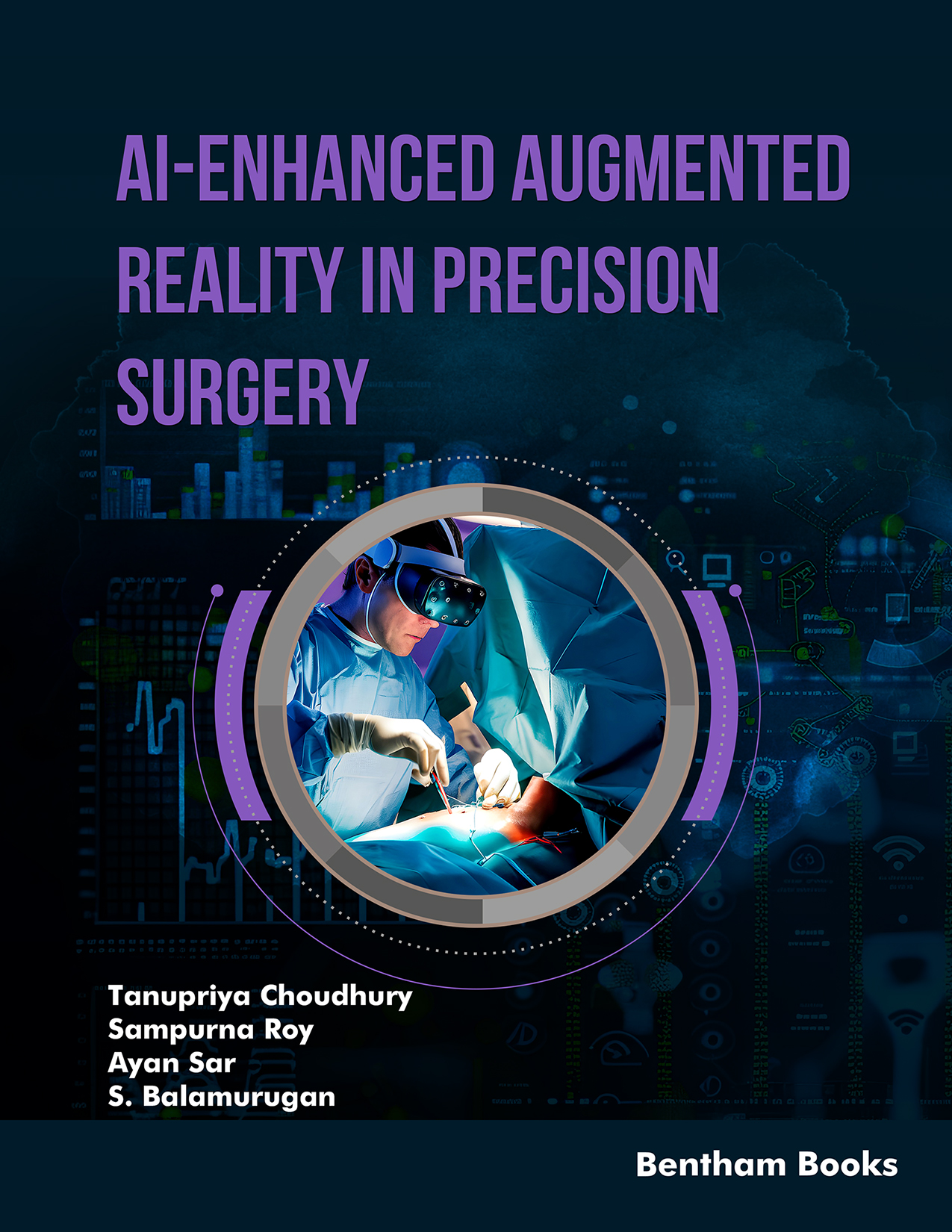
The intersection of Artificial Intelligence (AI) and Augmented Reality (AR) is transforming the landscape of modern healthcare, pushing the boundaries of what is possible in precision surgery. As technological advancements continue to accelerate, the integration of AI and AR into surgical environments is no longer a theoretical concept but an emerging reality that promises unprecedented improvements in surgical accuracy, efficiency, and patient outcomes.
This book, AI-Enhanced Augmented Reality in Precision Surgery, has been conceived as a comprehensive resource for researchers, clinicians, engineers, and students seeking to understand and contribute to this evolving field. It captures the essence of how AI and AR are converging to reshape the future of surgical practice, offering both conceptual foundations and practical insights.
Chapter 1: The Convergence of AI and Augmented Reality in Surgery
This introductory chapter lays the foundation by discussing the historical evolution of surgical technologies and the gradual integration of AI and AR into clinical practice. It outlines the unique strengths of AI in data-driven decision-making and AR in immersive visualization, emphasizing how their convergence fosters precision, safety, and efficiency in modern surgical interventions.
Chapter 2: AI-Powered Medical Imaging and Surgical Planning
Accurate diagnostics and meticulous planning are pillars of successful surgery. This chapter focuses on AI-driven advancements in medical imaging, including computer vision, deep learning, and segmentation techniques that extract actionable insights from complex datasets. It further discusses how AI-augmented imaging is integrated into AR platforms to create detailed, patient-specific surgical roadmaps, enhancing preoperative confidence and preparedness.
Chapter 3: Augmented Reality for Real-Time Surgical Guidance
The ability to overlay critical anatomical information directly onto the surgical field is revolutionizing intraoperative procedures. This chapter delves into AR's role in providing real-time, context-aware guidance during surgery, enabling enhanced visualization of hidden structures, improved depth perception, and increased surgical precision. Practical examples from neurosurgery, orthopedic, and minimally invasive procedures illustrate AR’s impact on clinical outcomes.
Chapter 4: Robotics and AI-AR Synergy in Precision Surgery
Robotic surgery represents the pinnacle of precision, dexterity, and control. This chapter explores the synergistic integration of AI, AR, and robotic platforms, highlighting how AI enhances autonomous decision support, AR enriches surgeon-machine interaction, and robotics provides mechanical accuracy. Emerging examples from telesurgery, micro-surgery, and complex reconstructions demonstrate this powerful triad's real-world potential.
Chapter 5: Personalized and Adaptive AI-AR Systems for Surgery
Modern healthcare is shifting towards personalization, and surgery is no exception. This chapter discusses adaptive AI-AR frameworks that tailor surgical workflows to individual patient profiles and evolving intraoperative conditions. Topics include AI-driven predictive models, dynamic AR overlays, and intelligent systems that continuously adapt based on real-time feedback, fostering truly personalized surgical experiences.
Chapter 6: Ethical, Security, and Regulatory Challenges in AI-AR Surgery
With technological advancement comes responsibility. This chapter addresses critical concerns surrounding the ethical use, data privacy, security vulnerabilities, and regulatory compliance of AI-AR systems in surgery. It reflects on algorithmic bias, explainability, cybersecurity risks, and the evolving global regulatory landscape, advocating for the responsible development and deployment of these powerful technologies.
Chapter 7: Case Studies and Future Trends in AI-AR-Driven Surgery
The final chapter presents real-world case studies showcasing successful AI-AR implementations in diverse surgical domains, from cardiac and orthopedic procedures to complex oncological resections. Building on these examples, it outlines emerging research directions, technological frontiers such as holographic surgery, AI-driven autonomous interventions, and the envisioned trajectory of AI-AR in shaping the next generation of precision surgery.
This book serves as a comprehensive guide for clinicians, researchers, technologists, and policymakers striving to understand and harness the transformative potential of AI-enhanced augmented reality in surgery. It is our hope that this work inspires responsible innovation and paves the way for safer, smarter, and more patient-centric surgical care.
Tanupriya Choudhury, Sampurna Roy, Ayan Sar
School of Computer Science, University of Petroleum
and Energy Studies (UPES), Dehradun
Uttarakhand, India
&
S. Balamurugan
Research and Development, Intelligent Research
Consultancy Services (iRCS), Coimbatore
Tamil Nadu, India