
Introduction
Artificial intelligence and augmented reality are transforming precision surgery by improving visualization, surgical planning, and intraoperative decision-making. Together, these technologies enable more accurate, personalized, and data-driven procedures while supporting improved patient outcomes and greater efficiency across a range of surgical specialties.
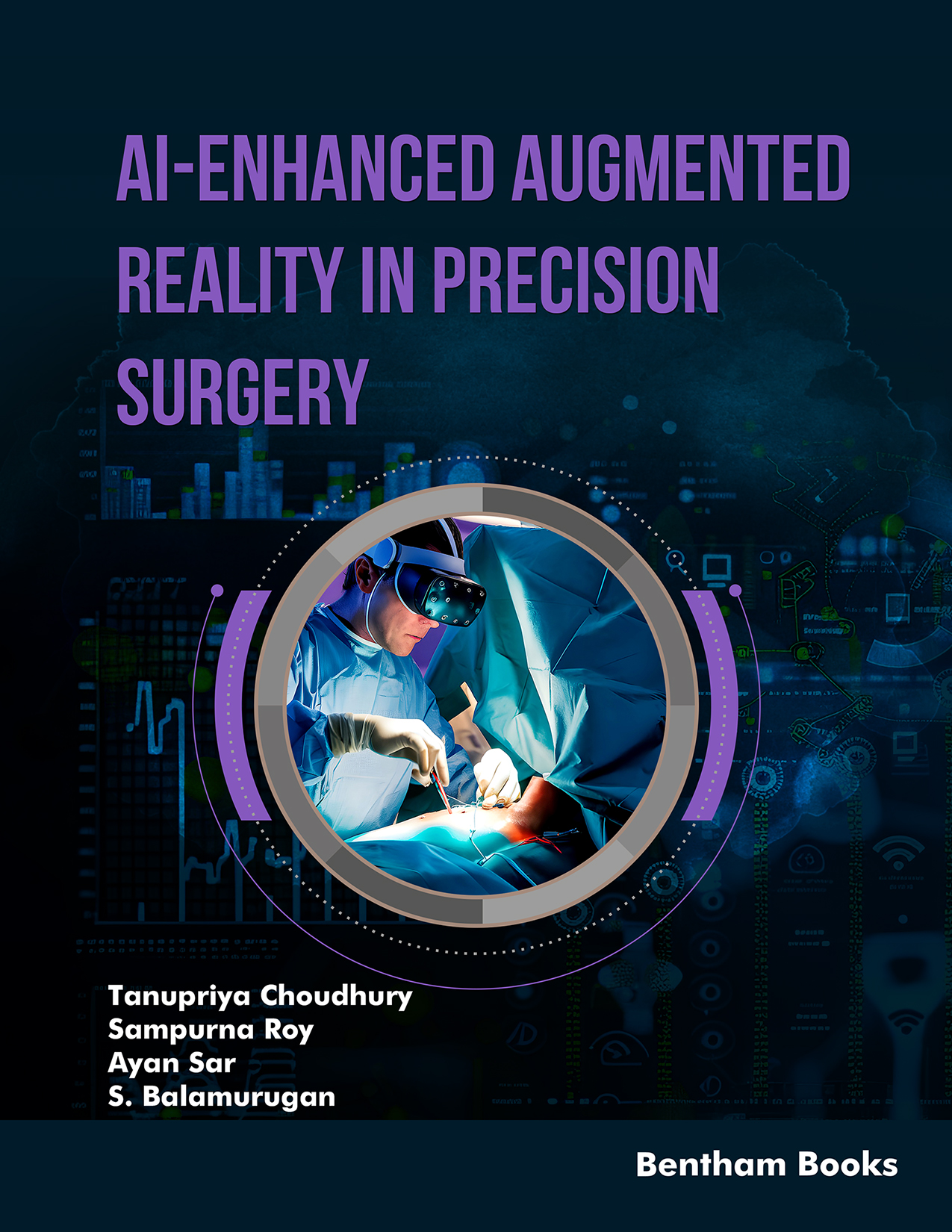
AI-Enhanced Augmented Reality in Precision Surgery provides a comprehensive overview of the integration of AI and AR in contemporary surgical practice. The book examines AI-powered medical imaging, surgical planning, real-time augmented reality guidance, robotics-assisted interventions, and adaptive AI-AR systems for personalized care. It also explores ethical considerations, cybersecurity, regulatory frameworks, and emerging trends, supported by practical case studies that demonstrate clinical applications and future directions in precision surgery.
Key Features
- - Comprehensive Technical Insights: Detailed breakdowns of deep learning architectures (e.g., U-Net, CNNs) and AR hardware (e.g., Microsoft HoloLens) used in clinical settings.
- - Practical Application: Extensive real-world case studies across medical specialties, including neurosurgery, orthopaedics, and thoracic surgery.
- - Holistic Approach: In-depth discussions on critical non-technical barriers, such as data privacy, algorithmic bias, and global regulatory compliance.
Target Readership :
Primary Readers: Clinicians, surgeons, and medical researchers actively seeking to implement or understand advanced technologies in surgical practice.
Secondary Readers: Biomedical engineers, healthcare technologists, policymakers and medical students who need to understand the technological future of precision healthcare.