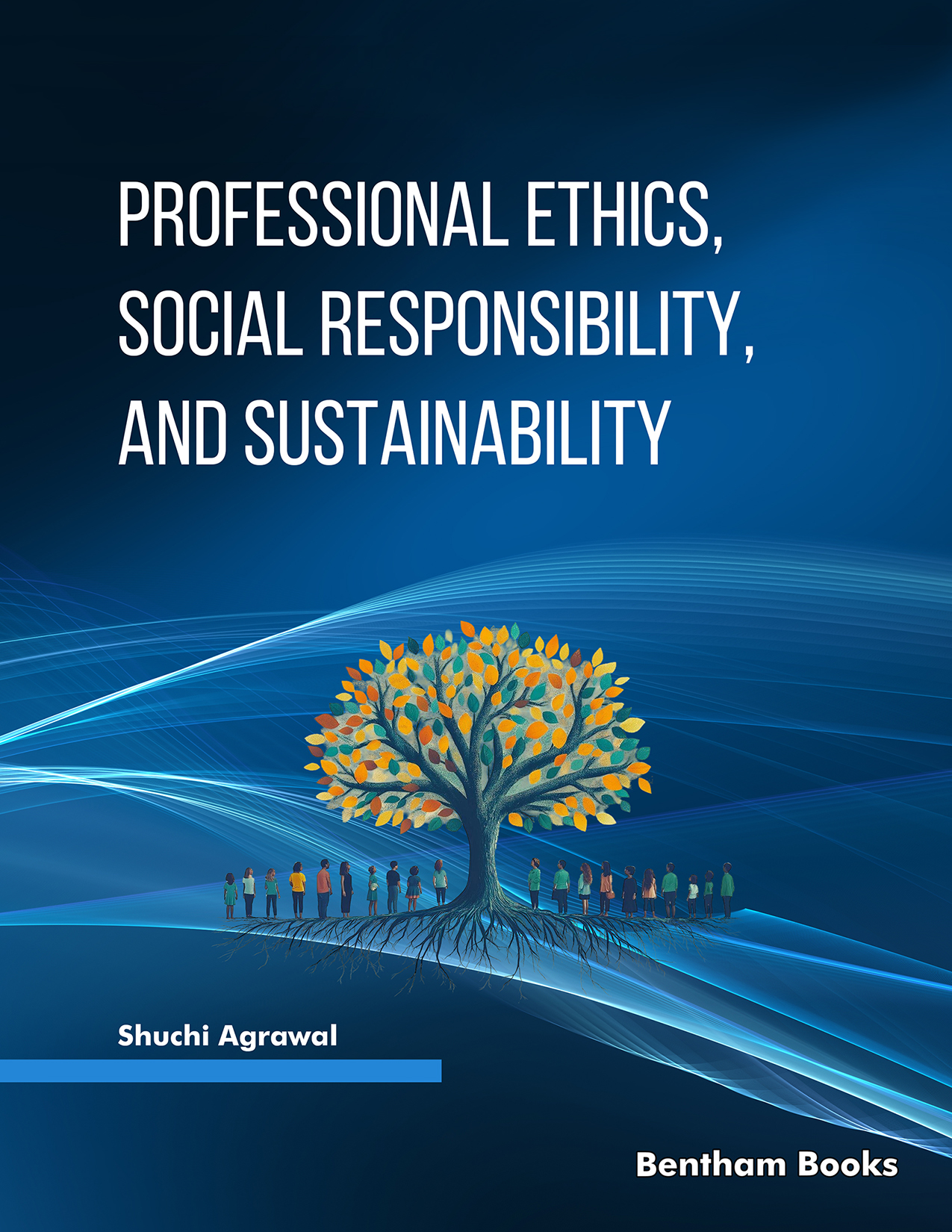
In an increasingly interconnected, technologically advanced, and environmentally fragile world, the study of professional ethics, social responsibility, and sustainability has never been more imperative. This book lays the foundation for understanding these interconnected domains as indispensable to modern professional and organizational life. It emphasizes that ethics is not merely a response to crises but a lifelong commitment; that corporate social responsibility has evolved from philanthropy to a strategic necessity; and that sustainability must encompass social justice, economic equity, and ecological balance.
Chapter 1 – Introduction sets the stage, demonstrating through case studies, including rural physicians in India during COVID-19, literacy programs in South Africa, and indigenous cooperatives managing resources, how compassion, accountability, and inclusion strengthen communities. These examples illustrate that ethics, CSR, and sustainability are not optional ideals but essential for trust, justice, and resilience.
Chapter 2 – Navigating Professional Ethics in a Globalized, Diverse, and Sustainable World situates ethics in the context of globalization, cultural diversity, rapid technological change, and environmental challenges. Traditional frameworks are critically analysed through insights from feminist ethics, critical race theory, care ethics, and cosmopolitan perspectives. Case studies in multinational firms, hospitals, and infrastructure projects highlight the practical alignment of personal values with organizational culture.
Chapter 3 – Foundations of Ethical Philosophy examines the philosophical underpinnings of ethics, including virtue ethics, deontology, utilitarianism, Nishkam Karmayoga, and social contract theory. It bridges classical philosophy with applied ethics in business, medicine, environment, media, and technology, while addressing the universality of moral principles alongside cultural specificity.
Chapter 4 – Behavioural Ethics Frameworks
explores how real-world decisions are shaped by cognitive biases, moral disengagement, conformity, and organizational pressures. Using examples from Enron, Wells Fargo, Volkswagen, and cases like Johnson & Johnson, it emphasizes that ethical lapses are often systemic, requiring both individual reflection and institutional safeguards.
Chapter 5 – Ethics, Accountability, and Governance in a Global Context highlights the interplay between moral leadership, transparency, and responsibility in global contexts. Examining corporate, public, and international governance, it demonstrates that accountability-upward, downward, and horizontal-is crucial for trust, legitimacy, and organizational resilience.
Chapter 6 – Diversity, Equity, and Inclusion (DEI): Ethical Imperatives in Institutions frames DEI as a moral and strategic imperative. Beyond concerns of representation, fairness, and belonging, it underscores the importance of intersectionality and structural equity. Case studies across universities, corporations, and public institutions show how inclusive practices enhance innovation, legitimacy, and ethical integrity.
Chapter 7 – Corporate Social Responsibility, ESG, and B-Corp Models shows how companies are moving beyond philanthropy to embed ethics into strategy, operations, and stakeholder engagement. From Patagonia’s climate activism to the Volkswagen scandal, the chapter illustrates how genuine responsibility builds trust and resilience, while superficial CSR risks credibility.
Chapter 8 – Ethical Dissent: Whistleblowing in Organizational Contexts highlights whistleblowers as agents of moral courage, balancing loyalty to employers with duty to society. Cases like Enron, Facebook, and COVID-19 healthcare whistleblowers highlight the serious personal risks individuals face and the meaningful organizational reforms their courage can drive.
Chapter 9 – Workplace Ethics: Rights, Responsibilities, and Conflicts explores everyday moral challenges in professional life, including discrimination, privacy, loyalty, and pressure from organizational demands. Through real-world examples such as Uber, Google, and Wells Fargo, it emphasizes the need for ethical cultures that respect dignity, fairness, and accountability.
Chapter 10 – Environmental Ethics, Circular Economy, and Sustainable Development explores our moral obligations to nature and future generations. By linking environmental ethics with circular economy practices and the UN Sustainable Development Goals, it offers pathways to sustainable growth and ecological responsibility.
Chapter 11 – Ethics and Technology in the Digital Age addresses the ethical challenges of AI, big data, social media, and digital innovation. From algorithmic bias to privacy and cybersecurity, the chapter advocates for responsible design, corporate digital responsibility, and informed citizens in a technology-driven world.
Chapter 12 – Sectoral and Discipline-Specific Ethical Dilemmas examines how ethics manifests differently across medicine, law, business, media, academia, and environmental professions. Through rela-life cases, it underscores the need for moral imagination, professional judgment, and context-sensitive decision-making.
Chapter 13 – Ethics, Global Citizenship, and Societal Transformation highlights how ethical leadership, literacy, and empowerment can foster participatory democracy, social justice, and sustainability. Case studies from India, Spain, Bolivia, and Finland demonstrate how individual and collective action can transform societies.
Chapter 14- Conclusion emphasizes that ethics is a continuous journey. By integrating personal and professional values and cultivating moral imagination, we can navigate modern challenges and contribute to a just, sustainable, and compassionate world.
This book invites readers to explore ethics not just as a theory but also as a lived practice-one that empowers action, inspires courage, and shapes a better future for people, communities, and the planet. Together, these chapters provide a comprehensive guide for scholars, leaders, and professionals seeking to navigate the ethical, social, and environmental responsibilities of our times. By blending theory with practice, philosophy with case studies, and global perspectives with local realities, this book aims to inspire principled action and informed decision-making across all spheres of professional life.
Shuchi Agrawal
Amity Institute of English Studies & Research
Amity University, Noida
Uttar Pradesh, India