
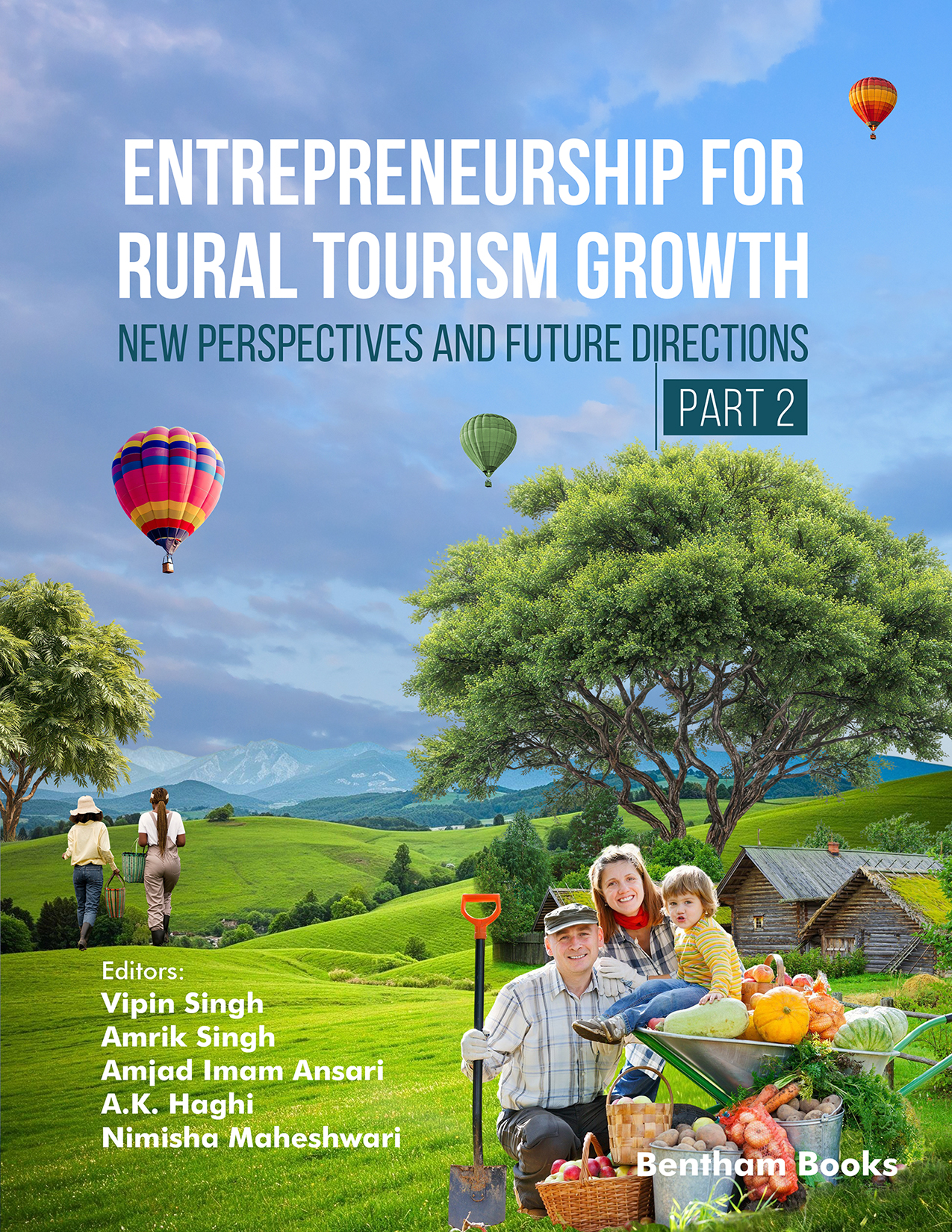
Editors: Dr. Vipin Singh, Dr. Amrik Singh, Dr. Amjad Imam Ansari, Dr. A.K. Haghi Ph.D, Nimisha Maheshwari

Entrepreneurship for Rural Tourism Growth: New Perspectives and Future Directions (Part II)

eBook: US $39 Special Offer (PDF + Printed Copy): US $89
Printed Copy: US $69
Library License: US $156
ISBN: 979-8-89881-559-2 (Print)
ISBN: 979-8-89881-558-5 (Online)
Year of Publication: 2026
DOI: 10.2174/97988988155851260101

Introduction

The Entrepreneurship for Rural Tourism Growth series brings together interdisciplinary research and practical insights to show how innovative entrepreneurial approaches can stimulate rural economies while preserving cultural heritage and environmental resources.

Bridging theory and practice, the series covers a wide range of themes, including community-based tourism, agritourism, social entrepreneurship, and sustainable practices such as waste management and gastronomy tourism. It also explores emerging dimensions like digital transformation, advanced technologies (GIS, AR/VR), and the integration of renewable energy and resource-efficient models.

Featuring comparative case studies and evidence-based research from India, China, Malaysia, Nigeria, and beyond, the series offers a global perspective on international best practices and localised solutions. Inclusivity is emphasised through discussions on women’s leadership, community participation, and innovative financing mechanisms such as crowdfunding and public-private partnerships.


Key Features

  • - Comprehensive coverage of rural tourism, entrepreneurship, and sustainability.
  • - International case studies spanning diverse regions.
  • - Integration of emerging technologies such as GIS, AR/VR, and digital platforms.
  • - Focus on inclusive development, including indigenous communities and women’s leadership.
  • - Practical insights into alternative financing models and sustainable tourism practices.

Target Readership :

Academics, researchers, students, and policymakers in tourism, sustainability, and entrepreneurship.

Foreword

With the acceleration of technological development, climate change demands, and changing consumer tastes, rural tourism entrepreneurship has been fundamentally transformed. Volume II of this collection addresses the contemporary and prospective aspects of rural tourism development, with attention to introducing the latest research and applied planning strategies, thereby positioning rural communities as the best place to examine innovative tourism sustainability.

Volume II deals with the issues and opportunities that characterize modern rural tourism entrepreneurship and are crucial. This book explores the theme of forest farming to help people reflect on community thinking, nature-based adventure tourism, sustainable entrepreneurship via data analytics, a model of public-private partnerships, the use of technology, virtual reality applications, leadership in women-led community entrepreneurship, crowdfunding tools, and new financing, across eleven chapters. The interaction between tradition and innovation is dynamic, as reflected in these chapters, in which rural communities take advantage of modern tools while maintaining their unique identities and conserving the environment.

The chapters in Volume II show that successful rural tourism entrepreneurship continues to rely on the strategic use of technology, shared forms of governance, inclusive leadership development, and innovative financing. The case studies and research present national and local destinations as examples of how to be on the global stage and preserve their authenticity and sustainability.

These two volumes offer the complete roadmap for stakeholders who wish to promote rural tourism entrepreneurship in a manner that brings prosperity to the region, helps maintain cultural heritage, and supports environmental conservation. We believe that the information, tools, and concepts in the books will be additional ingredients in turning rural communities into dynamic, strong, and viable tourism destinations.

We owe our profound gratitude to all the contributing authors, whose wide experience and global perspectives have enriched this collection and played a significant role in advancing knowledge and practice in rural tourism entrepreneurship across the globe.

Ahmad Albattat
School of Global Hospitality and Tourism
Asia Pacific University of Technology & Innovation (APU)
Kuala Lumpur, Malaysia