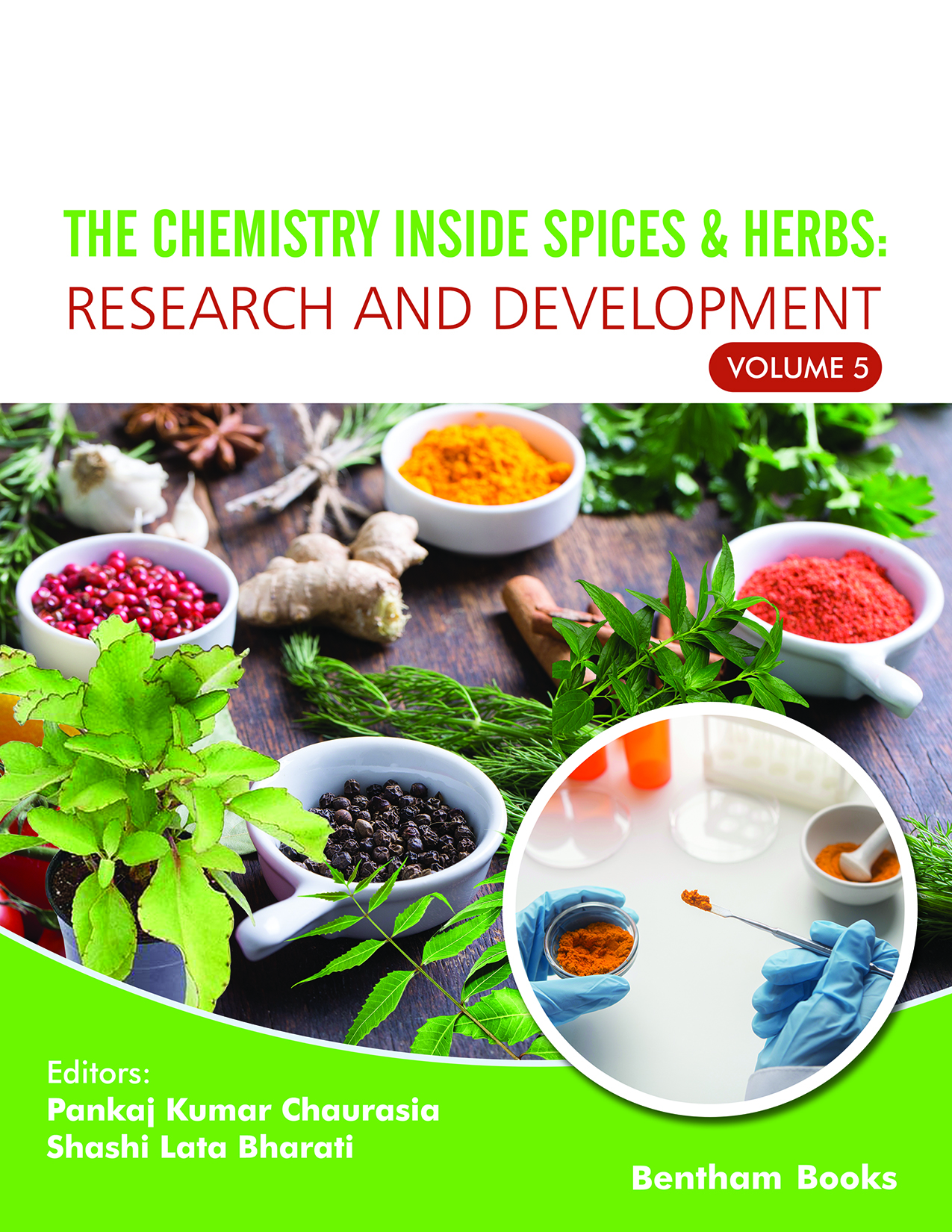
This book, volume 5 of the book series “The Chemistry Inside Spices & Herbs: Research and Development,” presents an extensive discussion on the various phytochemical extraction techniques, and comprehensive literature on the phytochemistry and medicinal advantages of various pharmacologically significant herbs/plants like Catharanthus, Podophyllum hexandrum, Mappia , Annona, Bryophyllum pinnatum, Azadirachta indica L., Andrographis paniculata, and Euphorbia. This volume is composed of a total of nine chapters written by experts in their field and is an excellent source of literature on the aforementioned medicinal plants’ phytochemical and pharmacological attributes.
Chapter 1, Written by Bamidele et al., delves into the principles and applications of different extraction methods, supported by case studies of spices and herbs. Emphasis is placed on their potential for scalability, improved bioavailability, and creation of high-value products for the nutraceutical, pharmaceutical, and food industries. Future advancements require a multidisciplinary approach to refine these techniques to enable sustainable and efficient phytochemical recovery tailored to industrial applications.
Chapter 2, Written by Sarkar et al., deals with the detailed chemistry and pharmacological roles of Catharanthus, commonly known as Madagascar periwinkle. The promising pharmacological profile of Catharanthus highlights the necessity for ongoing exploration into its phytochemical constituents and their therapeutic applications, which could pave the way for the development of new treatments for a variety of diseases, thereby reinforcing the plant’s significance in both traditional and modern medicine.
Chapter 3, Written by Patel et al., presents a comprehensive assessment of chemistry and pharmaceutical roles of Podophyllum. Podophyllum hexandrum L., a perennial herb native to the Himalayan region, has garnered significant attention due to its remarkable medicinal properties. This plant, known as the "divine drug," possesses a rich repertoire of secondary metabolites with potent pharmacological activities. Through a detailed analysis of the phytochemistry and pharmacology of Podophyllum, this chapter provides critical insights into the potential of this remarkable medicinal plant while advocating for sustainable approaches to its utilization and the development of safer derivatives for clinical use.
Chapter 4, Written by Ameen et al., presents a descriptive overview of the phytochemistry and pharmacology of Mappia. This chapter also explores the barriers and opportunities to exploit Mapia's pharmacological potential fully, highlighting the need for more studies to isolate new molecules and understand their mechanisms of action.
Chapter 5, Written by Kumar et al., examines the phytochemical and pharmacological profiles of Annona, with particular reference to the broad spectrum of bioactive compounds that are found within this genus and their pharmacological properties. This chapter has endeavoured to bring together Western trends in scientific research and indigenous wisdom and culled from it the benefits of Annona as a medicinal plant.
Chapter 6, Written by Rajak et al., presents an insight into phytochemistry and medicinal properties of Bryophyllum pinnatum. The phytochemistry and pharmacology of Bryophyllum pinnatum highlight its potential as a versatile medicinal agent. Further research is warranted to explore its therapeutic applications in many other health-related issues.
Chapter 7, written by Sharma and Kumar, describes the chemistry and medicinal applications of Azadirachta indica L, commonly known as ‘Neem’. Due to its promising traditional medicinal applications, it is also known as "Village dispensary”.
Chapter 8, Written by Agarwalla et al., is envisioned to provide an extensive study of diverse phytochemicals present in Andrographis paniculata and their pertinent pharmacological actions to support its ethno-medicinal uses with an opportunity for development in the future. Andrographis paniculata (Burm. F.) Wall. Ex Nees, usually known as Kalmegh or Green chiretta, is a distinguished herbal plant belonging to the taxonomic family Acanthaceae with a worldwide distribution.
Chapter 9, Written by Thakur et al., presents a thorough investigation of the phytochemistry of Euphorbia and seeks to review the wide array of bioactive compounds available from different species. The chapter also discusses historical uses of Euphorbia as herbal medicine. The integration of traditional knowledge with modern pharmacological research highlights the importance of Euphorbia as a valuable source of therapeutic agents. This comprehensive review aims to provide valuable information on the chemical profile of Euphorbia sp. and of its potential therapeutic uses.
Pankaj Kumar Chaurasia
P.G. Department of Chemistry, L.S. College,
B. R. Ambedkar Bihar University,
Muzaffarpur-842001, Bihar,
India
&
Shashi Lata Bharati
Department of Chemistry, North Eastern
Regional Institute of Science and
Technology (NERIST), Nirjuli-791109,
Itanagar, Arunachal Pradesh,
India