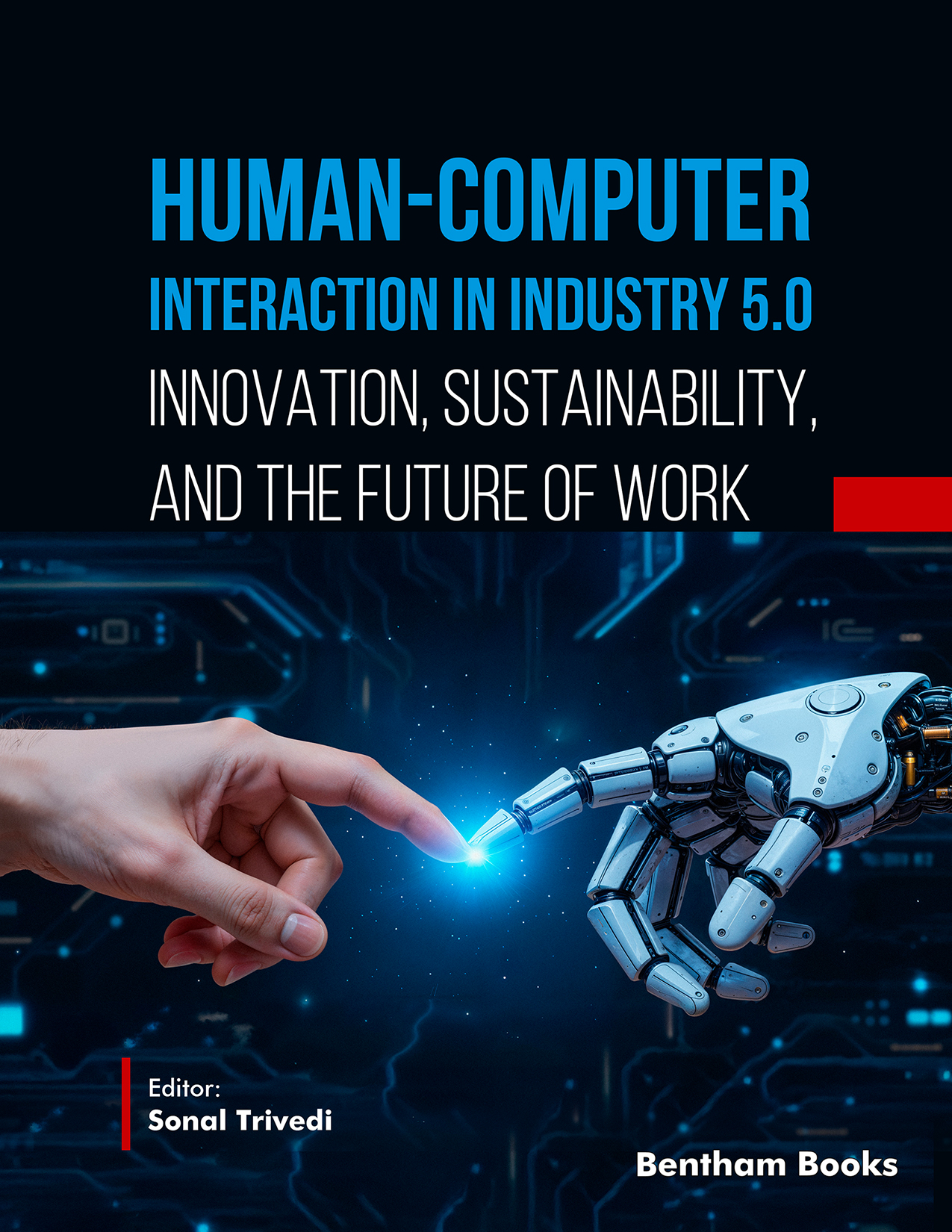
The Human-Machine interface is no longer only a domain of engineering and design; it is also one of the defining aspects of our lives in the twenty-first century. As we enter Industry 5.0, it is important to note that Human-Computer Interaction has undergone a radical shift. Human-Computer Interaction is not only dealing with making computers user-friendly anymore; it is now all about building a dialogue between human intellect and technological progress that not only answers to the needs of our present scenario of climate change, resource depletion, global instabilities in economies, and increasing digital divide or disparities, but is also doing it in a way that is sustainable in nature. Within this framework, it is important to note that “Human-Computer Interaction: Managing Innovation and Sustainability” is a book that makes a necessary contribution to today's world.
This book is a compilation of various scholarly and professional writings that embody both the hope and the need that come with innovation. As digital transformation sweeps across various industries like supply chain management, marketing and advertising, communication, finance, education, and governance, it is important to remember that the human element is at the heart of any successful use of technology. The contributions in this book discuss various ways in which artificial intelligence, blockchain, IoT, big data, and other forms of digital technology may aid and not overshadow human decision-making, creative thought, and values. The views presented in the book offer profound insights into global realities and social and cultural settings in countries like India, Malaysia, South Africa, Zimbabwe, and Italy. The book presents technology not as a panacea but as an enabler that needs to perform in relation to design and strategic vision.
The authors of this edited book tackle very important issues: How can renewable energy infrastructure transform supply chains for a low-carbon economy? How can communication technologies empower knowledge workers and institutions around the world? What leadership approaches are required to navigate risk and complexity in a volatile, uncertain, complex, and ambiguous (VUCA) world? How can learning institutions become breeding grounds for green innovation and social responsibility in the age of intelligent machines? These issues are interconnected and woven into the overall tapestry of human-centric change. Industry 5.0, in contrast to its predecessor, is more interested in collaboration, empathy, flexibility, and a sense of meaning than in mere efficiency and automation. The future of innovation, as indicated in the chapters of this book, will not be determined by how quickly we implement systems, but by how carefully we connect them to the needs of humanity and the planet.
However, what makes this book unique is its application of academic insights to real-life or macro-relevance. However, whether it is developing a curriculum at a business school, driving digital transformation at a public organization, or developing sustainability strategies at a multinational corporation, many of the ideas discussed in this book will serve as a directional force or inspiration for many people around the world. Another interesting characteristic of this edited book series is that the publishing background of authors and publishers ranges from business and law to engineering and media-related fields, hence establishing the interdisciplinary nature of the field of study referred to as HCI.
The editors have conceptualized this volume not just as a compilation of research but also as a site for conversation between regions, disciplines, and generations. It is meant to spur deeper thinking about how we, the global community, can imbue innovation with goals that are economically profitable, socially equitable, and environmentally regenerative. It is a call to action: to think beyond narrow definitions of progress, to embrace complexity, and to co-create solutions that enhance rather than diminish the human experience. It dares us to dream of futures wherein humans and computers do not compete but collaborate in a common march toward sustainability.
We would like to thank all the contributors whose intellect and vision have made this book possible, and the various academicians and reviewers who have aided in its development. We hope that the readers of this book, whether educators, researchers, entrepreneurs, students, or policymakers, will find both clarity and curiosity, as well as frameworks and vision within its pages. In a world that finds itself struggling to adapt to the pace of technological progress, we hope that this book will be a constant reminder that the true key to innovation is our ability to put the human spirit at the forefront of every leap we make into the digital age.
Sonal Trivedi
School of Business
Manav Rachna University
Faridabad, Haryana
India