
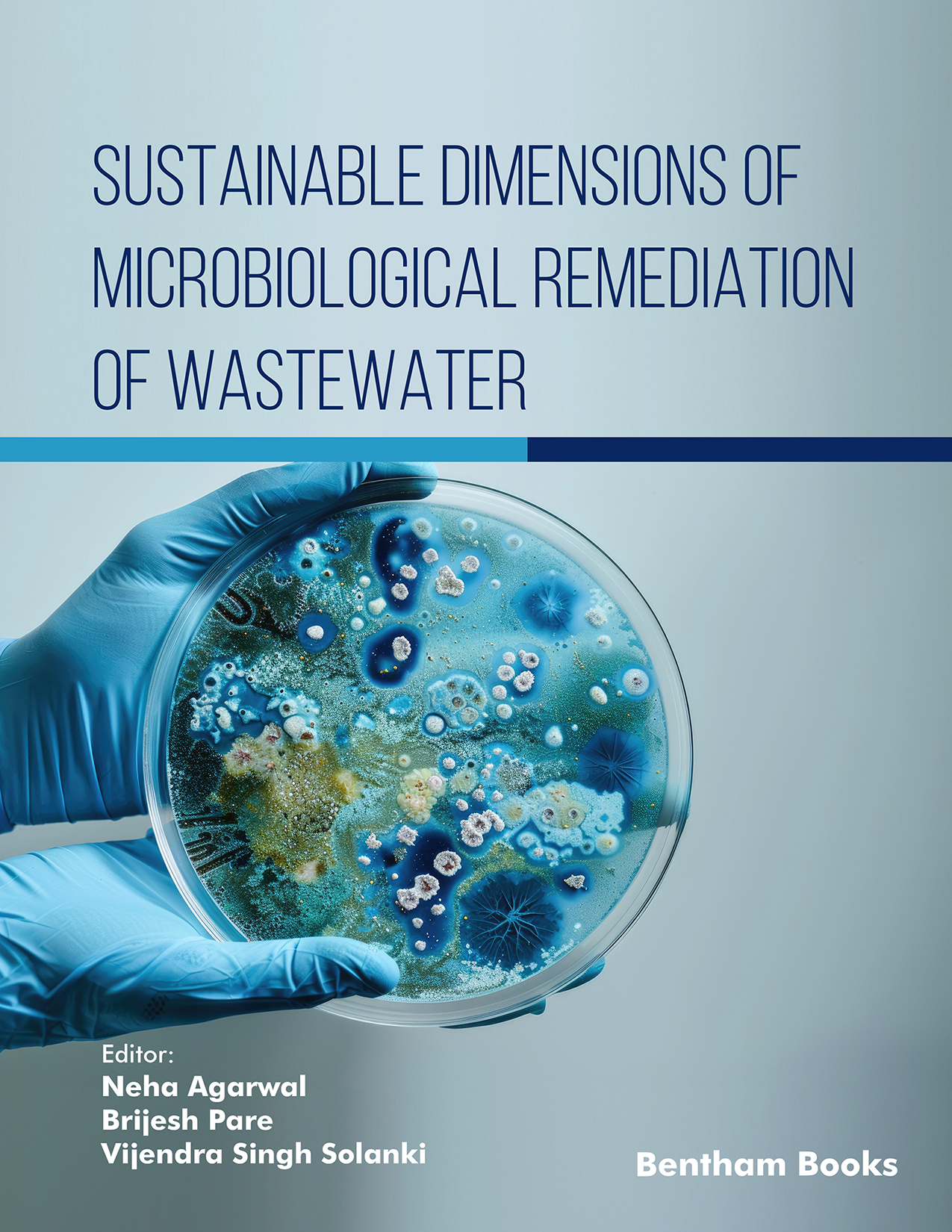
Sustainable Dimensions of Microbiological Remediation of Wastewater

Editors: Neha Agarwal, Vijendra Singh Solanki, Brijesh Pare

Sustainable Dimensions of Microbiological Remediation of Wastewater

ISBN: 979-8-89881-610-0
eISBN: 979-8-89881-609-4 (Online)

Introduction

Sustainable Dimensions of Microbiological Remediation of Wastewater brings together recent advances in microbiology, biotechnology, and environmental engineering to demonstrate how microbial systems can be effectively harnessed to address the growing global challenge of wastewater pollution.

The volume begins by outlining the types, toxicity, and sources of wastewater, along with conventional treatment approaches and their limitations. It then introduces microbial remediation as a sustainable and eco-friendly alternative, highlighting the ability of microorganisms to degrade, transform, and remove a wide range of pollutants from contaminated water systems. The book explores how microbial processes offer cost-effective and environmentally safe solutions compared to traditional physicochemical methods.

A major focus is placed on diverse microbial strategies, including indigenous microorganisms, biofilm-based technologies, genetically modified microorganisms, microalgae, and cyanobacteria. These chapters explain how microbial communities can be optimised for enhanced pollutant removal, bioenergy production, and carbon sequestration. Advanced technologies such as biosorption, membrane bioreactors, and constructed wetlands are also discussed, showcasing integrated systems that improve efficiency and scalability in wastewater treatment.

The book further examines the bioremediation of industrial effluents and heavy metal-contaminated wastewater, emphasising the role of microbial diversity in detoxification and environmental restoration. It also highlights recent technological innovations, current challenges, and future perspectives in microbial wastewater treatment, encouraging continued research and development in this rapidly evolving field.


Key Features

  • - Comprehensively covers the types of wastewater, toxicity, and treatment strategies.
  • - Detailed insights into microbial remediation as a sustainable treatment approach.
  • - Focus on biofilms, indigenous microbes, algae, and genetically modified microorganisms.
  • - Inclusion of advanced technologies such as membrane bioreactors and constructed wetlands, biosorption and heavy metal bioremediation techniques.
  • - Discusses Industrial applications and emerging trends in environmental biotechnology.
  • - Critical evaluation of challenges and future directions in wastewater management.

Target Readership :

For researchers, academics, environmental scientists, microbiologists, biotechnologists, and engineers and professionals working in wastewater treatment and environmental remediation.

Preface

The global water crisis, intensified by industrialization, urbanization, and environmental degradation, underscores the urgent need for sustainable wastewater treatment solutions. As contaminants ranging from heavy metals to organic pollutants threaten water security, microbiological remediation has emerged as a cornerstone of eco-friendly, efficient, and scalable wastewater management. By harnessing the natural capabilities of microorganisms, these approaches transform wastewater from an environmental burden into a resource for recovery and reuse, aligning with the principles of a circular economy and Sustainable Development Goal 6: Clean Water and Sanitation.

Sustainable Dimensions of Microbiological Remediation of Wastewater offers a comprehensive exploration of microbial technologies, blending scientific rigor with practical applications. Each chapter is meticulously crafted to deepen the understanding of microbiological approaches, from pollutant removal to resource recovery, addressing both established and cutting-edge techniques.

Chapter 1, Wastewater Types, Toxicity, Pollution and Approaches for Treatment, lays the foundation by detailing the sources and impacts of wastewater contaminants, setting the stage for microbial interventions.

Chapter 2, Microbial Remediation: A Sustainable Approach for Wastewater Treatment, introduces the potential of microbial consortia for sustainable wastewater treatment.

Chapter 3, Indigenous Microorganisms in Wastewater Remediation, explores biofilm technologies leveraging native microbial communities, while

Chapter 4, Genetically Modified Microorganisms as a Biotechnological Tool for Wastewater Treatment, examines engineered microbes for enhanced remediation.

Chapter 5, Recent Advances in the Performance of Microbial Bio-films in Wastewater Remediation, delves into biofilm optimization, and

Chapter 6, Microalgae: An Emerging Tool for Treatment of Industrial Wastewater and Biofuel Production, highlights the dual role of algae in pollutant removal and bioenergy production.

Chapter 7, The Role of Cyanobacteria in Wastewater Treatment and Carbon Sequestration, addresses opportunities and challenges in cyanobacterial applications, followed by

Chapter 8, Biosorption: A Sustainable Environmental Remediation Technology for Wastewater Treatment, which focuses on microbial adsorption mechanisms.

Chapter 9, Principles and Applications of Membrane Bioreactors in Wastewater Treatment, explores advanced bioreactor systems, while

Chapter 10, Microbial Communities in Constructed Wetlands for Sustainable Wastewater Remediation, emphasizes nature-based solutions.

Chapter 11, Bioremediation of Heavy Metal Contaminated Wastewater, addresses heavy metal removal, and

Chapter 12, Current Trends, Challenges, and Future Prospects in Microbial Wastewater Treatment, synthesizes emerging trends and future directions.

This book aims to serve as a vital resource for environmental researchers, engineers, policymakers, and students, offering a dynamic balance of theoretical insights and practical solutions. By bridging microbiology, environmental engineering, and sustainability, it seeks to inspire innovative approaches to wastewater remediation, paving the way for a water-secure and sustainable future.

Neha Agarwal
Department of Chemistry, Navyug Kanya Mahavidyalaya, University of Lucknow, Lucknow, Uttar Pradesh, India

Vijendra Singh Solanki
Department of Chemistry, Institute of Science and Research, IPS Academy, Indore, Madhya Pradesh, India

&

Brijesh Pare
Department of Chemistry, Madhav Science Post Graduate College, Ujjain
Madhya Pradesh, India