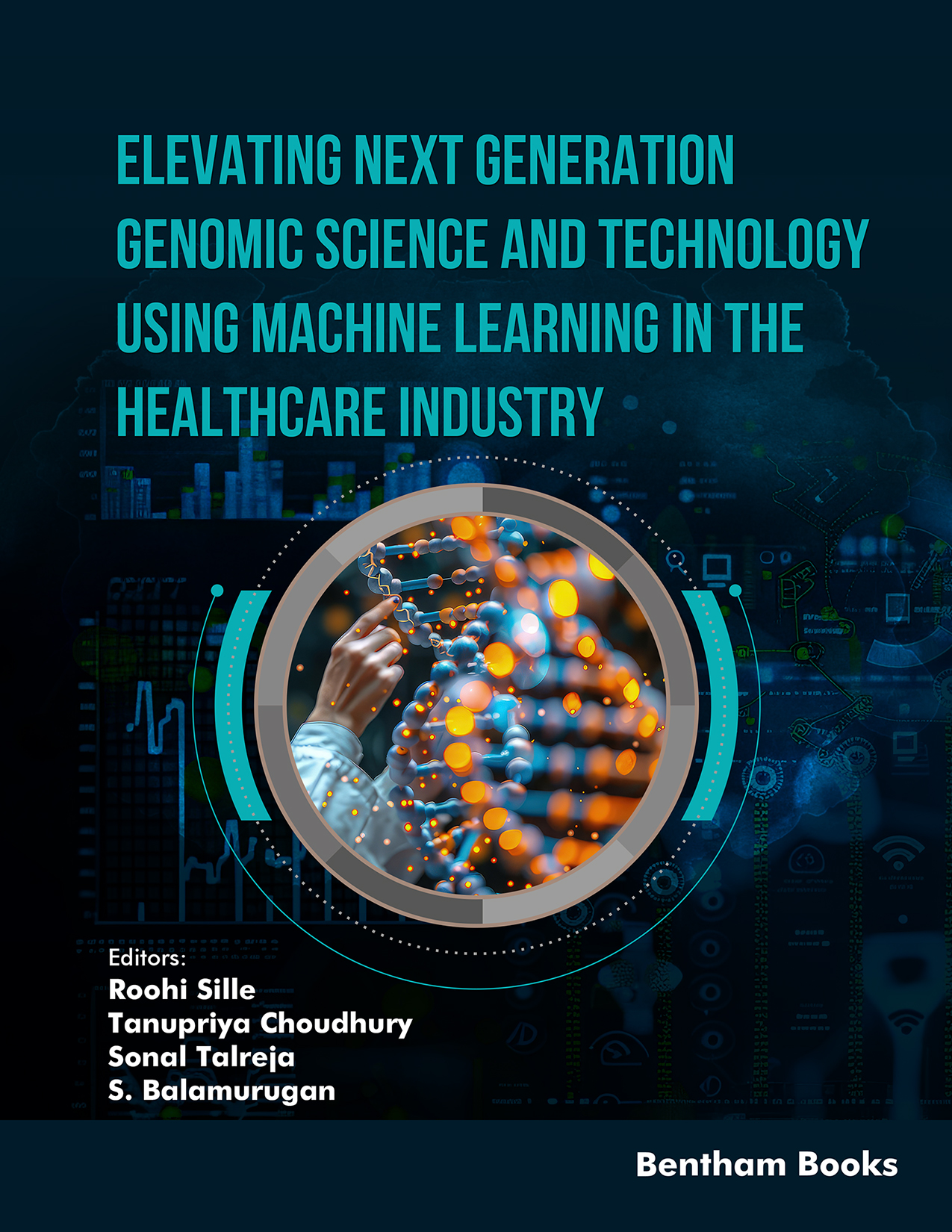
Genome mapping, a critical aspect of genomics, has seen transformative advancements with the advent of machine learning techniques. These innovative methodologies have redefined the way we analyse, interpret, and leverage genetic data. The book, "Elevating Next Generation Genomic Science and Technology using Machine Learning in the Healthcare Industry," aims to provide an in-depth exploration of the intersection of machine learning and genomics. It serves as a comprehensive guide for researchers, students, and professionals looking to harness the power of artificial intelligence in genomics.
The revolutionary capabilities offered by the field of Machine learning make it a powerful tool in genomic mapping. A human genome, made up of billions of base pairs, is a repository of vast amounts of information. This information plays a crucial role in developing a knowledge base for understanding diseases, genetic traits, and evolutionary processes. Handling the complexity and scale of genomic data has been a challenging task for most of the traditional methods.
In the context of genome mapping, machine learning algorithms are capable of processing genomic sequences, identifying patterns, and extracting meaningful insights in a more efficient and accurate manner than conventional approaches, offering enhanced accuracy, improved speed, and enabling personalised medicine.
Chapter 1: Overview of Next Generation Genomic Science and Technology Utilising Machine Learning in Healthcare
This chapter focuses on presenting an overview of genomic science and technology. It highlights the utilisation of various ML techniques in this field. It also delves into the transformation observed in healthcare with the introduction of various ML techniques in genomic science.
Chapter 2: A Review of AI-Driven Genomic Approaches for Cancer Detection and Personalized Medicine
The exponential increase in the demand for better and more effective ways to detect cancer demands exploration of new techniques. Artificial Intelligence is proving to be a strong candidate in offering such support. This chapter presents a review of the integration of AI into genomic research to enhance cancer detection, predict cancer risks, and provide personalized treatment plans.
Chapter 3: Machine Learning Approaches for Microbiome Analysis and Applications
ML techniques can play a major role in the improvement of human health. It can be used to analyse the structure of human microbiomes and how it can be used to enhance human health. This chapter focuses on the role of ML techniques for microbiome analysis and applications.
Chapter 4: Machine Learning Model for Annotation and Assembly of Genomes
This chapter focuses on the role of machine learning in genome annotation and assembly. It emphasizes how the ML models are used to decode complex genomic sequences, identifying genes and mutations. This understanding will greatly enhance the accuracy and efficiency of genome research.
Chapter 5: Extending Bayesian Classification to Predict Phase Transition in Biopolymer
This chapter explores the extension of Bayesian Classification techniques to predict the phase transitions in biopolymers. It discusses how this framework can help model the behaviour of biopolymers, which in turn can help the researchers gain better understanding of the structural changes for future drug development.
Chapter 6: Ethical Aspects of Analysing Genomic Data for Medical Analysis: A Comparative Study with a Focus on India
This chapter discusses the various ethical aspects of analysing genomic data for medical analysis. It covers various ethical topics, including patient consent and data privacy, and focuses on the regulatory landscape in India to ensure ethical practices in genomic medicine.
Chapter 7: Integrating Pharmacogenomics and Machine Learning in Personalised Treatment Strategies for Parkinson’s Disease
In this chapter, the focus is on the integration of pharmacogenomics and machine learning techniques in suggesting personalised treatment strategies for diseases like Parkinson's. It also explains how ML algorithms can help analyse genetic information for better drug prediction while minimising side effects. This can lead to more effective management of this disease.
Chapter 8: Analysing Microbiome Metagenomics to Detect Anomaly using Variational Autoencoders for Predicting Crohn's Disease
This chapter focuses on the use of variational autoencoders for analysing microbiome metagenomics data, which can help in predicting Crohn’s disease. It discusses various models that can potentially help in the early diagnosis of the disease.
Chapter 9: Leveraging ML Models for the Future of Genomes
The AI-driven approaches have enabled the rapid analysis of vast genomic datasets, improved diagnosis of various diseases, and drug discoveries leading to personalised medicines. This chapter explains the role of AI and ML in genetics, exploring their applications along with their benefits, challenges, and future prospects.
Chapter 10: Conclusion: The Transformative Role of Machine Learning in Genomic Science and Healthcare
This chapter presents the book's overall conclusion, including a summary of all previous chapters and how machine learning techniques have played a transformative role in Genomic Science and Healthcare.
Roohi Sille, Tanupriya Choudhury, Sonal Talreja
School of Computer Science
University of Petroleum and Energy Studies (UPES)
Bidholi Campus
Dehradun, Uttarakhand
India
&
S. Balamurugan
Research and Development, Intelligent Research
Consultancy Services (iRCS), Coimbatore
Tamil Nadu, India