Preface
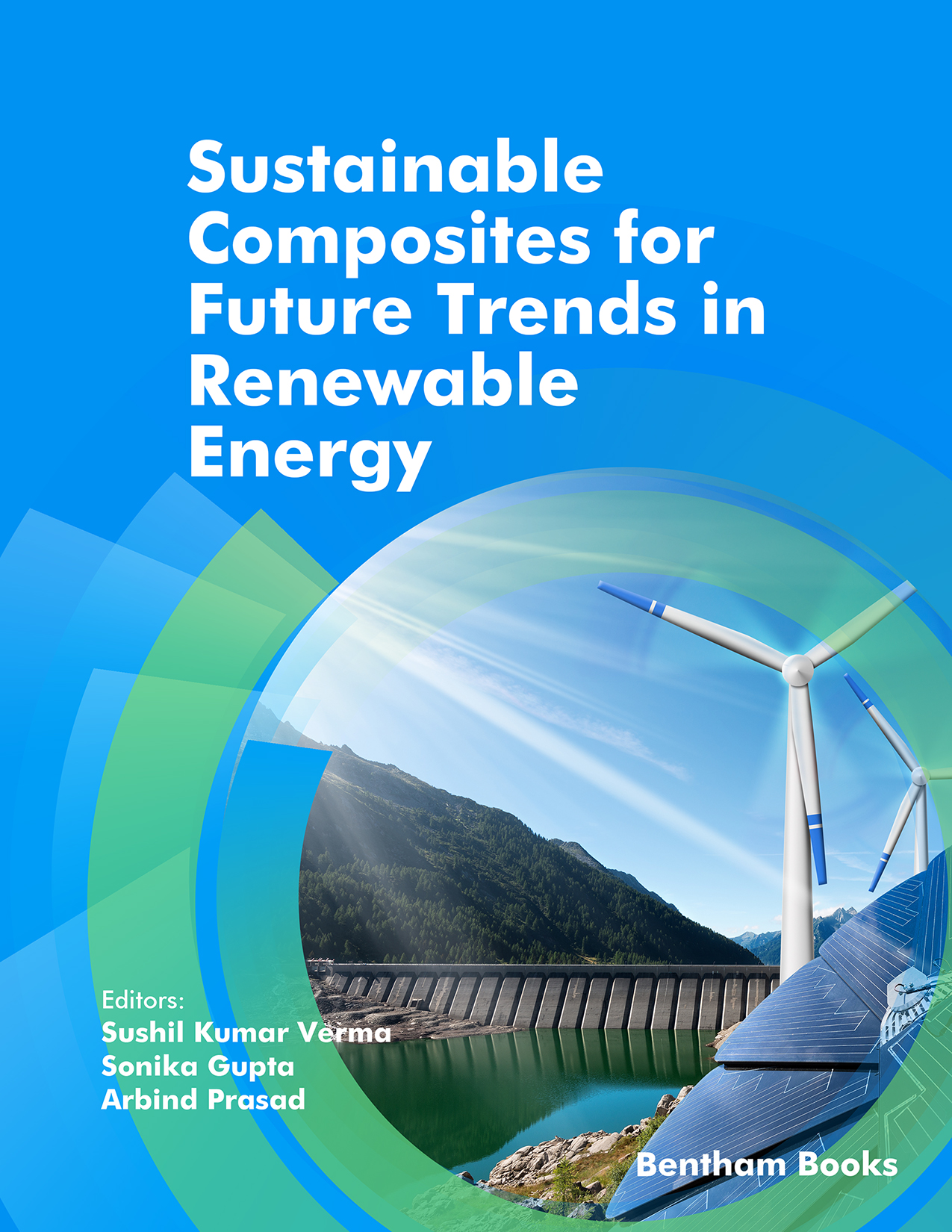
Our modern world's persistent demand for energy has elevated sustainability to the forefront of industrial and scientific innovation. The development of materials that adhere to sustainability principles has become crucial as we struggle with the critical issues of climate change and the depletion of natural resources. A timely response to these issues is this book, Sustainable Composites for Future Trends in Renewable Energy, which explores the potential of composites to transform the renewable energy industry. Composites are becoming increasingly essential in renewable energy applications because of their adaptable qualities, lightweight design, and variable performance. Sustainable composite materials are essential in challenging the limits of what is feasible in a variety of applications, including wind turbine blades, sophisticated solar systems, and next-generation energy storage devices. We achieve the demands of performance while also addressing environmental imperatives by emphasizing materials produced from renewable resources and environmentally friendly manufacturing techniques. The objective of the book is to present an extensive overview of the most important recent developments, discoveries, and studies in the field of sustainable composites for renewable energy. Numerous subjects are covered in the chapters, such as life cycle evaluation, application-specific optimization, fabrication techniques, and material design. In order to ensure that the insights provided here are both innovative and useful, the goal is to bridge the gap between scholarly research and industrial applications. Without the diligent efforts of researchers, professionals, and entrepreneurs who are dedicated to establishing a sustainable future, this book would not have been possible.
I sincerely appreciate everyone who contributed by sharing their expertise and perspectives. Their endeavors give us hope that we can overcome the obstacles of the twenty-first century and achieve an environmentally friendly and more sustainable future by working together and using our creativity. For students, researchers, scientists, and government officials interested in the nexus between materials science and renewable energy, I hope this book will be a useful resource. We can make the idea of a greener world a reality by utilizing the potential of sustainable composites.
Sushil Kumar Verma
Department of Chemical Engineering
CoE-Suspol Indian Institute of Technology Guwahati
Guwahati 781039, Assam, India
Sonika
Department of Physics, Rajiv Gandhi University
Rono Hills, Doimukh
Itanagar 791112, Arunachal Pradesh, India
&
Arbind Prasad
Mechanical Engineering Department
Katihar Engineering College (Under Department of Science
Technology and Technical Education, Government of Bihar)
Katihar 854109, Bihar, India