
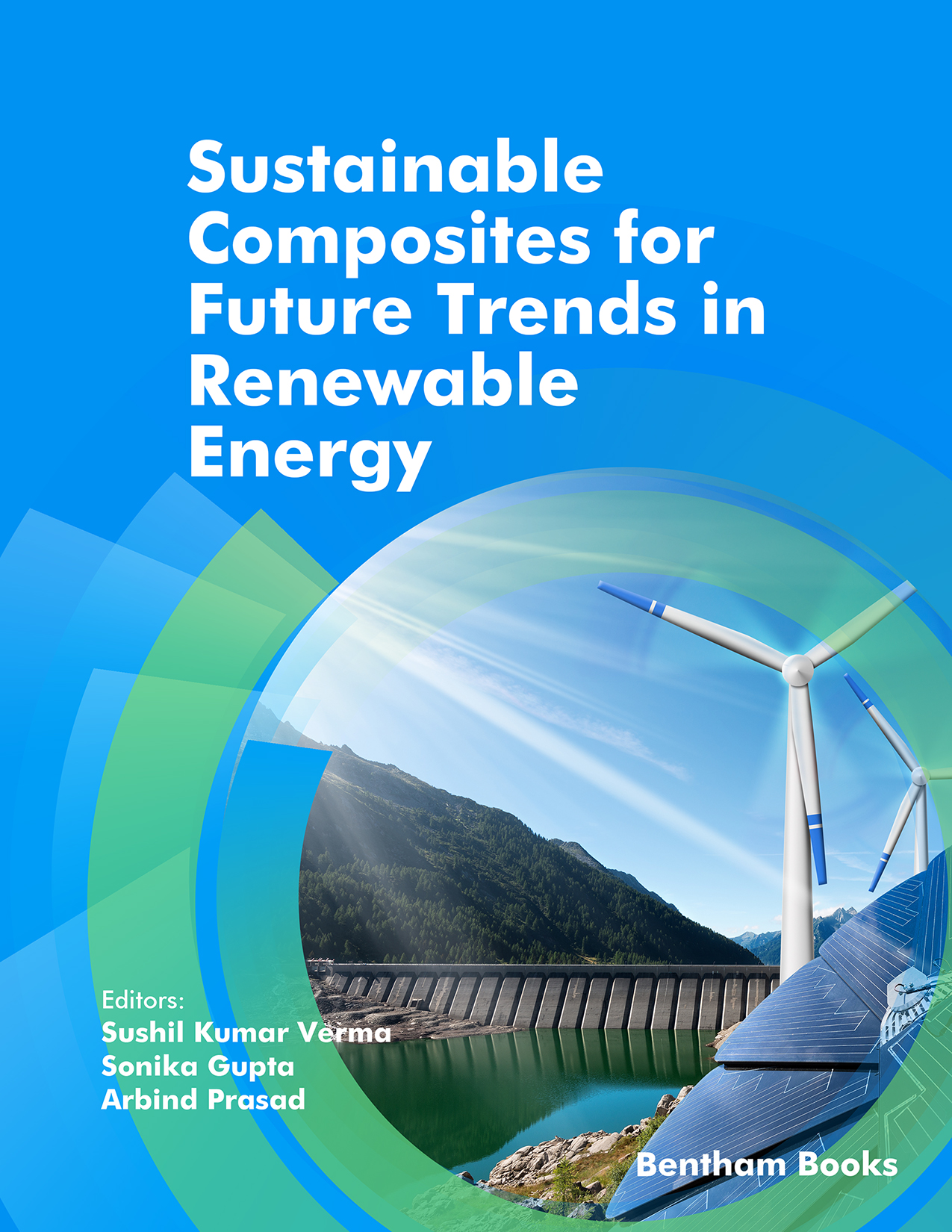
Sustainable Composites for Future Trends in Renewable Energy

Editors: Sushil Kumar Verma, Sonika , Arbind Prasad

Sustainable Composites for Future Trends in Renewable Energy

ISBN: 979-8-89881-223-2
eISBN: 979-8-89881-222-5 (Online)

Introduction

Sustainable Composites for Future Trends in Renewable Energy connects sustainability principles with high-performance composite design, highlighting eco-friendly synthesis, bio-based reinforcements, circular material models, and low-carbon energy applications across solar, wind, hydro, and bioenergy. Key chapters examine lightweight structural composites, biodegradable polymers, nanocomposites for energy storage, and life cycle assessment (LCA) methods increasingly used by the industry. The book positions sustainable composites as a core enabler in the global transition toward resilient and low-carbon energy systems.

Key Features

  • - Explains sustainable composite synthesis and manufacturing paths.
  • - Highlights bio-based and biodegradable reinforcement and polymer options.
  • - Demonstrates a lightweight, durable composite design for renewable energy systems.
  • - Explores nanocomposites for energy storage and barrier performance.
  • - Connects life cycle assessment insights to real industry adoption.
  • - Links circular material strategies to low-carbon economic goals.

Target Readership:

For scientists, engineers, researchers, and postgraduate students seeking practical and accessible knowledge in sustainable composites for clean energy systems.

Foreword

In an era where sustainability is the primary goal for scientific research and international policy, materials science is essential for advancing progress. The demand for sustainable, cost-efficient, and eco-friendly materials for renewable energy technologies has become increasingly urgent. Sustainable Composites for Renewable Energy addresses this pressing issue, offering an in-depth examination of advanced composite materials and their transformative potential in the renewable energy sector.

An important contribution to the growing field of sustainable energy materials is this publication. It covers topics like the design, manufacturing, and performance improvement of composites for energy generation, storage, and conversion, thereby bridging the gap between basic research and practical applications. The book offers an in-depth overview of the prospects and difficulties associated with developing a sustainable future by combining perspectives from a wide range of areas, such as energy systems engineering, nanotechnology, and polymer science.

In order to cover disciplines like bio-based composites and new materials for use in photovoltaics, fuel cells, and wind energy systems, the editors have expertly arranged chapters written by prominent experts. This book stands out for its emphasis on sustainability and dedication to promoting cutting-edge scientific research, which makes it a priceless tool for academics, business leaders, and legislators. This book provides direction and motivation as the world transitions to renewable energy. It highlights the revolutionary potential of sustainable composites and the vital role that collaboration, innovation, and moral responsibility have in addressing the world's energy problems.

The dedication and foresight of the editors and contributors in creating this work are commendable. I hope that Sustainable Composites for Renewable Energy will motivate future researchers and practitioners to contribute to a cleaner and more sustainable world.

Anoop Kumar
Delhi Pharmaceutical Sciences and Research University (DPSRU)
Govt. of NCT of Delhi
India