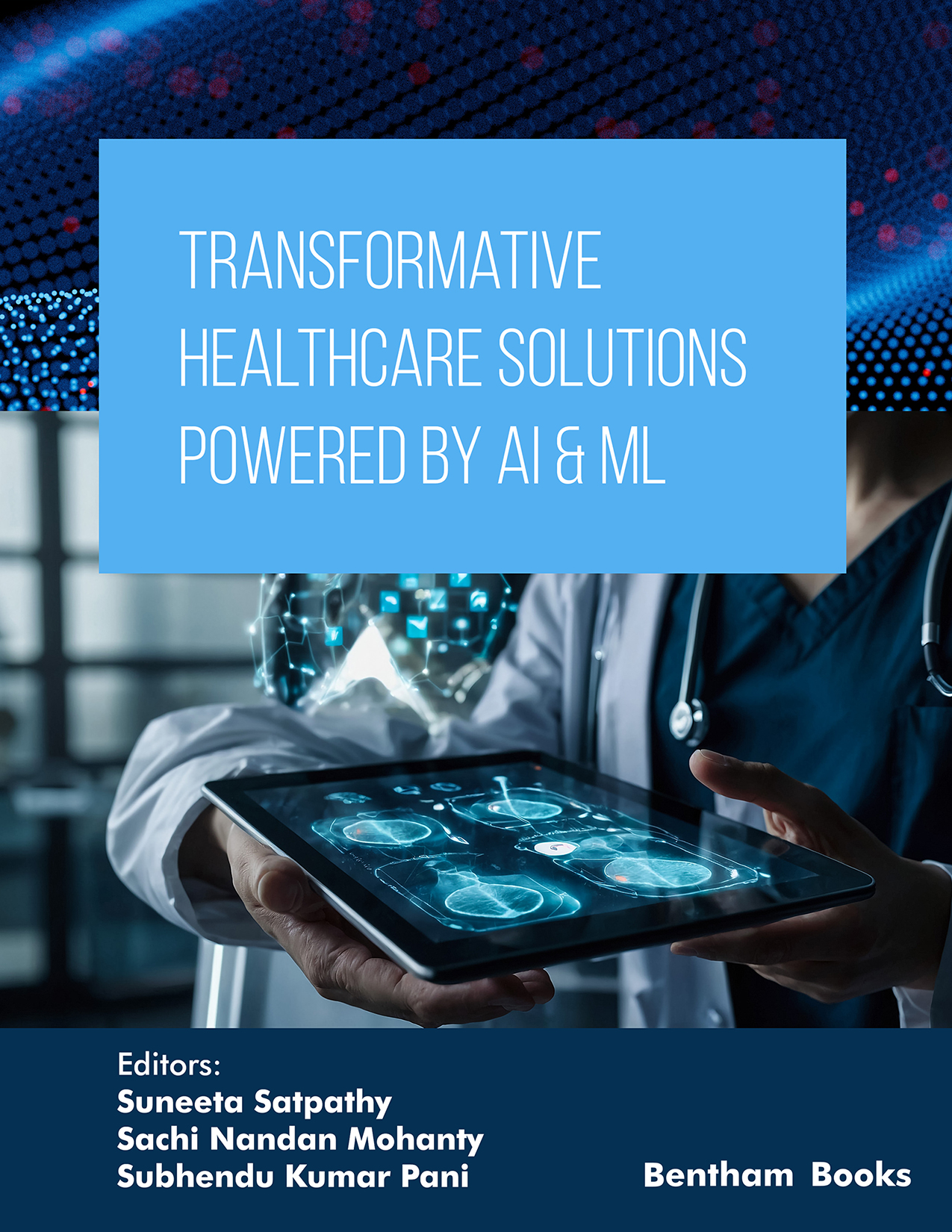
In a world where the digital and physical realms are inextricably linked, "Transformative Healthcare Solutions Powered by AI & ML" is a beacon of insight and inspiration. This book is more than a compendium of technical knowledge; it is a thoughtful exploration into the transformative power of Artificial Intelligence and Machine Learning and a compelling invitation to reimagine how we live, work, and interact in the modern age.
At a time when innovation is accelerating at an unprecedented pace, the fusion of human intellect with advanced computational systems is reshaping every facet of society. In these pages, you will discover a meticulously crafted narrative that demystifies complex technological concepts and brings the human stories behind them to life. The text seamlessly bridges rigorous scientific inquiry with a literary elegance that engages the mind and the heart.
The healthcare landscape is undergoing a profound transformation driven by the rapid advancement of Artificial Intelligence (AI) and Machine Learning (ML). These technologies, once confined to theoretical discussions and experimental labs, have now become integral to modern medicine redefining diagnosis, treatment, prevention, and patient care. The integration of AI and ML in healthcare marks not merely an evolution of existing systems but a revolutionary shift toward a predictive, personalized, and precision-oriented model of medicine. At the heart of this revolution lies data-massive volumes of it, generated through electronic health records, wearable sensors, imaging modalities, genomics, and real-time patient monitoring. AI and ML algorithms are uniquely capable of extracting actionable insights from this vast and complex data landscape, uncovering patterns that remain invisible to human observation. From early disease detection to outcome prediction, these intelligent systems are enabling healthcare professionals to make faster, more accurate, and data-driven decisions. The outcome is a paradigm shift from reactive to proactive care, where prevention and early intervention take precedence over late-stage treatment.
One of the most significant impacts of AI and ML is evident in diagnostic imaging and pathology. Deep learning models now surpass human-level accuracy in detecting anomalies across radiographs, CT scans, and MRIs. Similarly, ML-powered digital pathology assists in identifying malignancies at a microscopic scale, reducing diagnostic errors and turnaround times. Beyond imaging, AI-driven tools are being applied to genomics, enabling the identification of genetic predispositions and the development of personalized treatment regimens through precision medicine. Equally transformative are the applications of AI in clinical decision support systems (CDSS). These intelligent platforms synthesize patient histories, laboratory data, and evidence-based guidelines to assist physicians in selecting optimal therapeutic strategies. By augmenting, rather than replacing, clinical expertise, AI empowers healthcare professionals to focus more on patient care and less on administrative or repetitive analytical tasks. Moreover, the use of ML in drug discovery and vaccine design has dramatically accelerated biomedical innovation—shortening development cycles from years to months, as exemplified during the global COVID-19 pandemic.
AI and ML are also redefining healthcare delivery beyond hospital walls. Wearable health devices and remote patient monitoring systems continuously collect and transmit physiological data, allowing for real-time health assessments and early detection of complications. Predictive analytics helps healthcare systems anticipate disease outbreaks, manage hospital resources, and improve public health interventions. Together, these technologies are making healthcare more accessible, affordable, and inclusive, especially in underserved or remote areas. However, the journey is not without challenges. Issues surrounding data privacy, algorithmic transparency, and ethical governance must be addressed to ensure responsible and equitable AI deployment. Collaboration between technologists, clinicians, policymakers, and ethicists is essential to establish frameworks that safeguard human trust and uphold the integrity of medical practice. This volume, Transforming Healthcare with Revolutionary AI & ML, explores these developments in depth, highlighting the innovations, challenges, and future directions that define the next era of digital health. It stands as both a reflection of progress achieved and a vision for the transformative possibilities yet to come in the global pursuit of intelligent, patient-centered healthcare.
Fernando Moreira
Universidade Portucalense, Porto, Portugal