
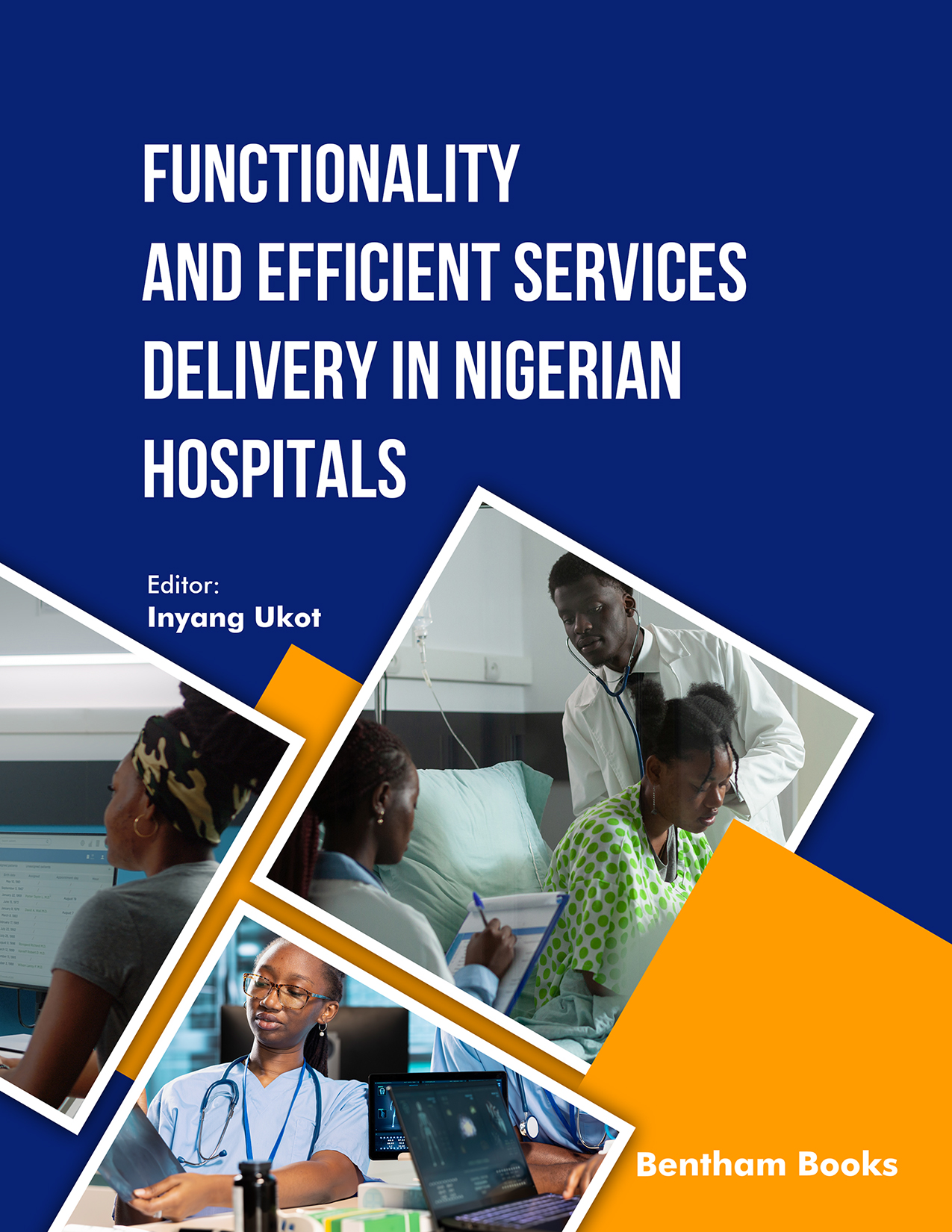
Functionality and Efficient Services Delivery in Nigerian Hospitals

Editor: Inyang Ukot

Functionality and Efficient Services Delivery in Nigerian Hospitals

ISBN: 979-8-89881-205-8
eISBN: 979-8-89881-204-1 (Online)

Introduction

Functionality and Efficient Services Delivery in Nigerian Hospitals offers a practical, evidence-based exploration of how hospitals in Nigeria operate, grow, and innovate under challenging conditions. Drawing on case studies from small, private, faith-based, and government-run facilities, the book examines leadership, human resources, infrastructure, and service-delivery models that improve efficiency and patient outcomes.

Across two parts, it moves from core principles, such as efficient human-resource management and functional facility design,to vivid real-world stories of Bowen University Teaching Hospital, University of Uyo Teaching Hospital, Mother and Child Hospital, and RST Clinics Ltd. These chapters blend management lessons, policy analysis, and practical recommendations for making hospitals functional and sustainable in Nigeria and similar contexts.


Key Features

  • - Analyses the structure, challenges, and opportunities of Nigerian hospitals across all tiers.
  • - Showcases leadership, HR, and infrastructure strategies for efficient service delivery.
  • - Profile real-world case studies from public, private, and faith-based hospitals.
  • - Recommends practical, scalable steps for improving hospital management and outcomes.
  • - Guides stakeholders in aligning policy, investment, and operations with community health needs.

Readership:

Designed for healthcare investors, hospital managers, medical students, health professionals, policymakers, and regulatory officials in Nigeria and other developing nations with similar contexts.

Preface

Functionality and Efficient Services Delivery in Nigerian Hospitals arose from the author’s observations during his over-forty-years medical practice, which covers the north, south, east, and west of Nigeria. The summary of the observations is that while there have been remarkable improvements and advancement in almost every segment of their societies, the advancement in medical facilities and medical services in Nigeria and many developing countries has lagged significantly – and the degree of dropping back in comparison with the status in the advanced countries seems that there is no hope of catching up unless Nigeria and similar countries make a definite and deliberate attempt at addressing this sore thumb. Dr. Ukot and his team believe that this situation can be resolved and that is why they joined hands to pen this book in a way that is easy to read and understand its contents and implement the suggestions it proffers; this is because of its deliberate a small volume that makes this work “friendly” enough for every reader to read in its entirety. This book is a combination of “saying it as it is” and “crying and hoping to be heard” while keeping in mind the beneficiaries of the goings on in our hospitals – the patients and the employees.

The title of this book, Functionality and Efficient Services Delivery in Nigerian Hospitals, is specific and the book limits itself to that. This book intends to cover, and therefore only deals with, the area of the goings-on in medical facilities and the various influences or factors that determine the structure, function, and clientele of hospitals in developing countries using Nigeria as the prototype.

In this book, the word “Hospital” encompasses facilities as small as health posts and health centers and large ones like tertiary hospitals, of which teaching hospitals are good examples. It is difficult to write on even the teaching hospitals in Nigeria as they belong to different “generations” in terms of age, equipment profile, staff strength, land and facility sizes, level and structure of personnel, administrative focus and style, and the peculiarities and diversity of the patients and third parties that patronize the hospitals. It was, consequently, very difficult to choose the four hospitals whose stories are told in this book – two of them are teaching hospitals and the other two are private hospitals. Of the two teaching hospitals, one is a Federal government-owned hospital, while the other is owned and run by a Christian Mission. With reference to the private hospitals, one is a medium-sized hospital, while the other is a small hospital. Each of them has an interesting story and they provide us with examples of making things work in similar existing or future hospitals. It was not difficult to choose some of the authors because they readily saw the need for the project when they were approached; it was difficult to eventually obtain consent to write from others as many declined due to time constraints in writing to meet deadlines. The completed work reflects the original intention and it is hoped that this work will be of assistance to every reader as it has a message for everyone.

Inyang Ukot
RST Clinics Ltd.
Federal Housing Estate
Uyo, Akwa Ibom State, Nigeria