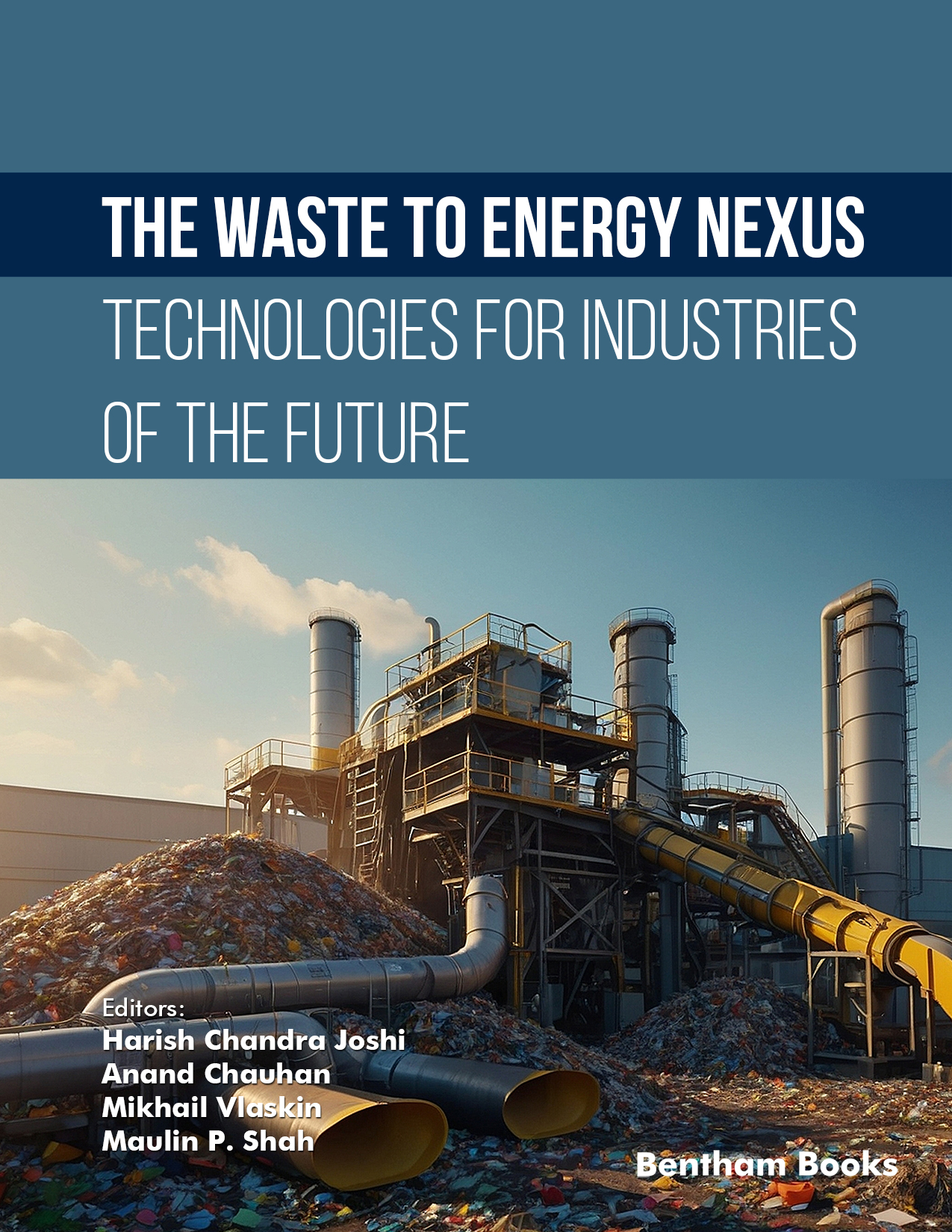
As the world enters the 21st century, waste management, coupled with energy security, remains a serious challenge. With a growing global population and fast-paced industrialization, the rate of waste generation has skyrocketed, putting tremendous pressure on planetary resources. At the same time, an unbridled quest for energy has propelled innovation towards solutions that are not only effective but also sustainable and environmentally benign. In 2015, all 193 countries finally resolved to work together towards making the world healthier by committing to 17 Sustainable Development Goals for 2030. One of the goals addresses sustainability in terms of affordable and clean energy. The relationship between waste and energy remains a promising avenue for achieving a sustainable future. This encompasses all aims within a single framework: realizing the energy potential of wasted materials while reducing environmental harm, conserving resources, and generating clean energy. This book examines cutting-edge technologies that significantly transform approaches to waste management and energy valorization processes.
This book will be beneficial for graduate and postgraduate students, research scholars, and engineers. Even non-specialist readers have the opportunity to grasp the intricacies of each topic and access the latest content in this book.
Chapter 1 explores various waste-to-energy technologies, including incineration, gasification, pyrolysis, and anaerobic digestion, as well as renewable energy sources such as solar, wind, and biomass. This chapter also explores the optimization of these systems, including process improvements, lifecycle assessments, smart grid integration, and supportive policies.
Chapter 2 explains the role of biorefineries in waste valorization within the circular economy, offering significant potential for advancing sustainability.
Chapter 3 provides information on biomass and its derivatives, which offer great potential as renewable energy sources, making them excellent alternatives for sustainable energy.
Chapter 4 explores the Biomass-derived biochar emerges as a sustainable and efficient material for energy storage applications in supercapacitors.
Chapter 5 introduces the research on hydrogen production, which is crucial for the development of sustainable energy alternatives. Hydrogen technology, which has the potential to revolutionize various industrial applications and significantly contribute to a sustainable, low-carbon economy, is gradually gaining recognition.
Chapter 6 introduces new technologies for recycling composite materials, as well as improvements to existing procedures and their adaptation for alternative applications.
Chapter 7 presents an overview of the primary methods for MSW utilization, aiming to elucidate the current state of MSW management and to assess and compare the environmental impacts of different MSW utilization pathways.
Chapter 8 explores methods for capturing CO2, including chemical absorption, adsorption using solid-phase porous materials, membrane separation, cryogenic separation, hydrate-based methods, and microbiological methods.
Chapter 9 explores "Ethanol 100: A New Approach for the Transportation Industry in India." This chapter outlines the policy initiatives undertaken, particularly in India, to develop and promote various alternative fuels for road transportation, highlighting the progress made in comparison to global advancements.
Chapter 10 presents the integration of circular economy ethics into the lifecycle management of solar panels, wind turbines, and battery storage systems, thereby ensuring a sustainable energy future.
Chapter 11 investigates the potential of algal biomass for bioethanol production and outlines a model for the complete conversion process.
Chapter 12 provides a comprehensive review of the characteristics, production, collection, disposal, and effective treatment technologies of MSW practiced in India. Incineration, pyrolysis, bio-refining, biogas facilities, recycling, and composting are among the waste management and treatment processes currently used.
Harish Chandra Joshi
Department of Chemistry
Graphic Era (Deemed to be) University
Dehradun, Uttarakhand, India
Anand Chauhan
Department of Mathematics
Graphic Era (Deemed to be) University
Dehradun
Uttarakhand, India
Mikhail Vlaskin
Joint Institute for High Temperature of the Russian Academy
of Science Moscow
Russia
&
Peoples' Friendship University of Russia named after
Patrice Lumumba
Moscow Russia
&
Maulin P. Shah
Department of Research Impact and Outcome Research
Research and Development Cell
Lovely Professional University
Phagwara
Punjab, India