
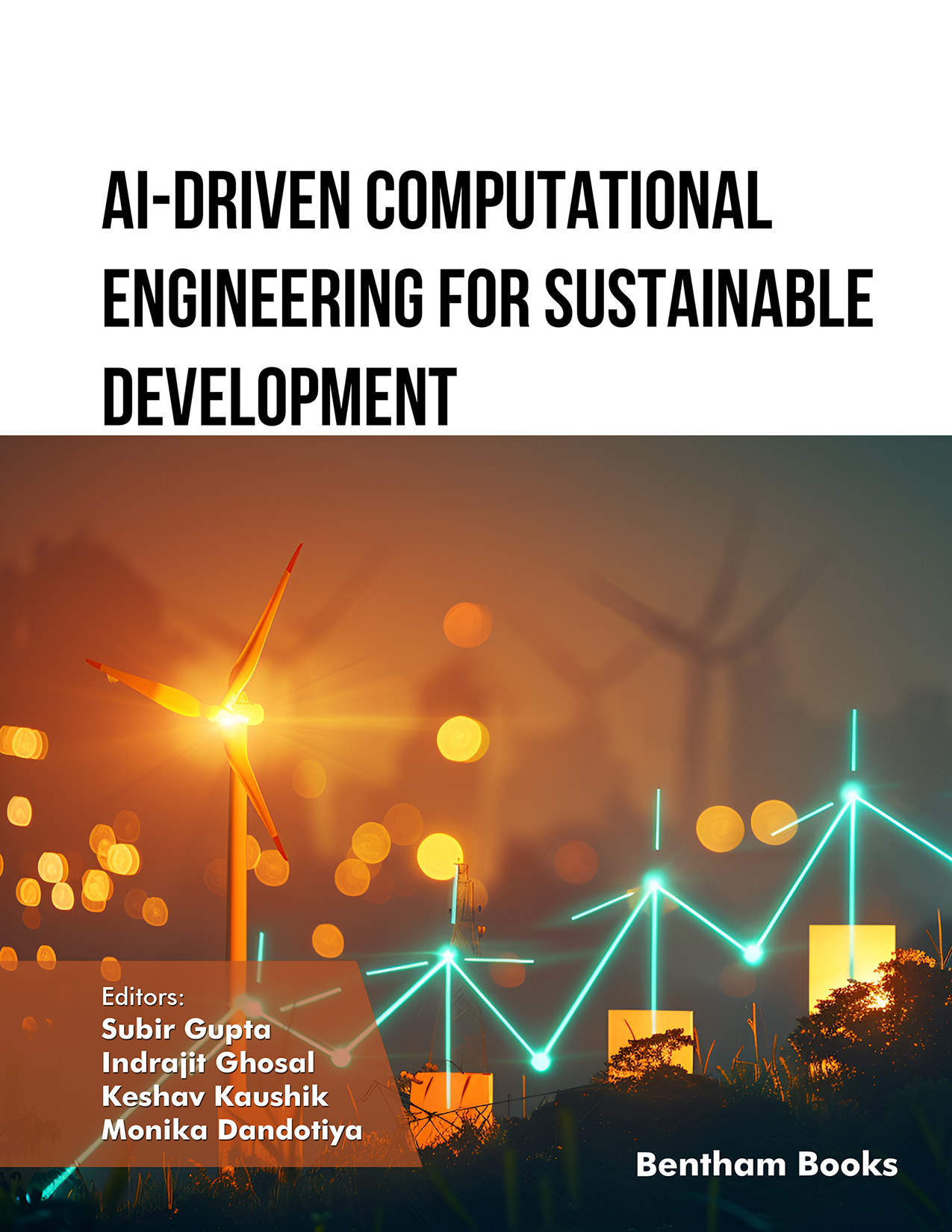
Editors: Subir Gupta, Indrajit Ghosal, Keshav Kaushik, Monika Dandotiya

AI-Driven Computational Engineering for Sustainable Development

eBook: US $89 Special Offer (PDF + Printed Copy): US $143
Printed Copy: US $98
Library License: US $356
ISBN: 978-981-5324-04-4 (Print)
ISBN: 978-981-5324-03-7 (Online)
Year of Publication: 2026
DOI: 10.2174/97898153240371260101

Introduction

AI-Driven Computational Engineering for Sustainable Development explores the convergence of Artificial Intelligence (AI), Natural Language Processing (NLP), and computational engineering in shaping the transition toward Industry 5.0. The book focuses on human-centric, sustainable, and data-driven approaches that enhance collaboration between humans and machines while improving productivity and environmental outcomes.

It begins by outlining the evolution from Industry 4.0 to Industry 5.0, followed by core concepts in AI, NLP, and computational engineering. The chapters then examine real-world applications in smart manufacturing, intelligent automation, and sustainable industrial systems. The book also addresses key challenges such as data management, ethics, system integration, and the need for resilient technological frameworks, offering insights into future research and innovation directions.


Key Features

  • - Covers AI, NLP, and computational engineering applications in Industry 5.0.
  • - Focuses on sustainable, human-centric, and data-driven industrial systems.
  • - Real-world applications and cases in smart manufacturing and intelligent automation.
  • - Discusses emerging research trends and future technological directions.
  • - Insights into challenges such as data governance, ethics, and system integration.

Target Readership :

Researchers, postgraduate students, academics and professionals in artificial intelligence, NLP, computational engineering, and sustainable technologies.

Preface

The dawn of Industry 5.0 marks a pivotal moment in the ongoing evolution of human-machine collaboration, offering unprecedented opportunities for sustainable development. As technology advances at an accelerated pace, the integration of Artificial Intelligence (AI) and Natural Language Processing (NLP) in computational engineering is emerging as a cornerstone of this new industrial paradigm. This book, AI-Driven Computational Engineering for Sustainable Development, is a comprehensive exploration of the role AI and NLP play in shaping the future of Industry 5.0, where the synergy between humans and machines drives innovation and progress. The concept of Industry 5.0 extends beyond the mere technological advancements that characterized its predecessor, Industry 4.0. It envisions a world where machines not only work alongside humans but collaborate with them in a harmonious partnership, enhancing productivity while fostering sustainable development. This book delves into the multifaceted aspects of this collaboration, examining how AI and NLP can be harnessed to address the complex challenges of modern computational engineering.

The theoretical and practical insights presented in these pages offer a rich resource for AI professionals, NLP researchers, database experts, and scholars in computational engineering. By exploring the opportunities, challenges, and applications of AI and NLP, this book equips readers with the knowledge needed to navigate and contribute to the rapidly evolving landscape of Industry 5.0.

One of the key objectives of this book is to identify and analyze emerging themes and research trends within the context of Industry 5.0. The scientific community's growing interest in this paradigm shift underscores the importance of understanding the implications of AI and NLP in fostering sustainable development. Through a detailed examination of the current state of research, this book also highlights critical gaps, offering a roadmap for future investigations and innovations. The book provides valuable insights into the economic and productivity implications of Industry 5.0. By focusing on the collaborative potential between humans and machines, it offers a fresh perspective on how this new industrial era can contribute to a more sustainable and efficient manufacturing industry, ultimately benefiting the broader economy.

AI-Driven Computational Engineering for Sustainable Development is designed to serve as a foundational text for both specialists and beginners in the field of computational engineering. Whether you are a seasoned researcher or new to the world of AI and NLP, this book will guide you through the complexities of Industry 5.0, offering the technical knowledge and conceptual frameworks necessary to contribute meaningfully to this transformative era.

As you embark on this journey through the pages of this book, we hope it inspires you to explore the limitless possibilities that AI and NLP offer for sustainable development in computational engineering. The future of Industry 5.0 is not just about advancing technology; it is about creating a world where humans and machines work together to build a better, more sustainable future.

Subir Gupta
Department of AI & ML
Haldia Institute of Technology
West Bengal, India

Indrajit Ghosal
Department of Management
Brainware University
Kolkata, India

Keshav Kaushik
Center for Cyber Security and Cryptology, Sharda
School of Computing Science & Engineering
Sharda University, Greater Noida, India

&

Monika Dandotiya
Department of Computer Science & Engineering
Poornima University, Jaipur
India